French Garlic Soup
French Garlic Soup is a beautiful example of how a handful of humble ingredients can become something elegant and deeply comforting. Rooted in the rustic kitchens of southern France, where versions like Provençal aigo boulido have been made for generations, this soup was traditionally served as a restorative, a simple bowl believed to soothe the body after illness or a long night. It’s often said in Provence that garlic soup “saves lives,” a nod to its reputation as a cure-all.
This version transforms an entire head of garlic into a mellow, sweet, nutty flavor through gentle blanching and simmering, then infuses it into a savory chicken broth scented with earthy sage.
What makes it special is the finishing touch: a homemade mayonnaise whisked into the hot broth, which turns the clear soup into a silky, lightly creamy bowl without any cream at all. It’s warming, aromatic, and surprisingly delicate, proof that garlic, handled with care, can be soft and soothing rather than sharp.
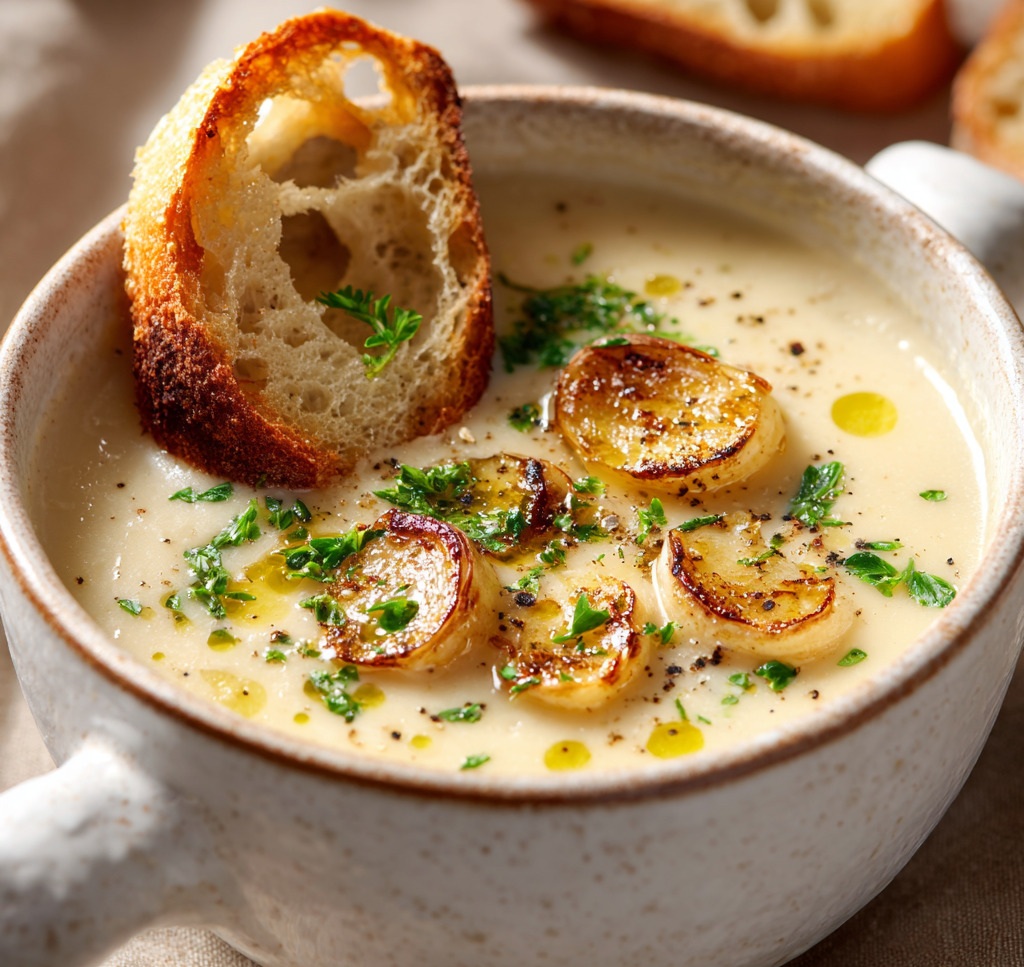
Why People Will Love French Garlic Soup Recipe
Surprisingly mellow garlic flavor: Blanching and simmering tame garlic’s harsh bite, leaving a sweet, nutty, gentle flavor that even garlic skeptics enjoy.
Creamy without cream: The homemade mayonnaise gives the soup a velvety, silky body using only egg and oil, an elegant classic French technique.
Simple ingredients, big results: Just a few pantry staples (broth, garlic, sage, egg, oil, and mustard) create a soup with remarkable depth.
Comforting and restorative: Warm, aromatic, and easy to digest, it’s the kind of soup people crave when they’re tired, chilled, or under the weather.
Elegant enough for guests: Its silky texture and refined flavor make it a lovely first course for a dinner party.
Fragrant herbal notes: Fresh sage adds an earthy, slightly peppery aroma that pairs perfectly with garlic.
Light yet satisfying: It’s filling and nourishing without feeling heavy, especially when served with crusty croutons.
A chance to learn classic skills: You’ll practice blanching, emulsifying, and tempering, foundational techniques in French cooking.
Customizable toppings: Croutons, smoked paprika, olive oil, parsley, or grated cheese let you shape each bowl to your taste.
Quick to make: Ready in about 30–40 minutes, it’s an easy way to bring a bit of French countryside cooking to a weeknight table.
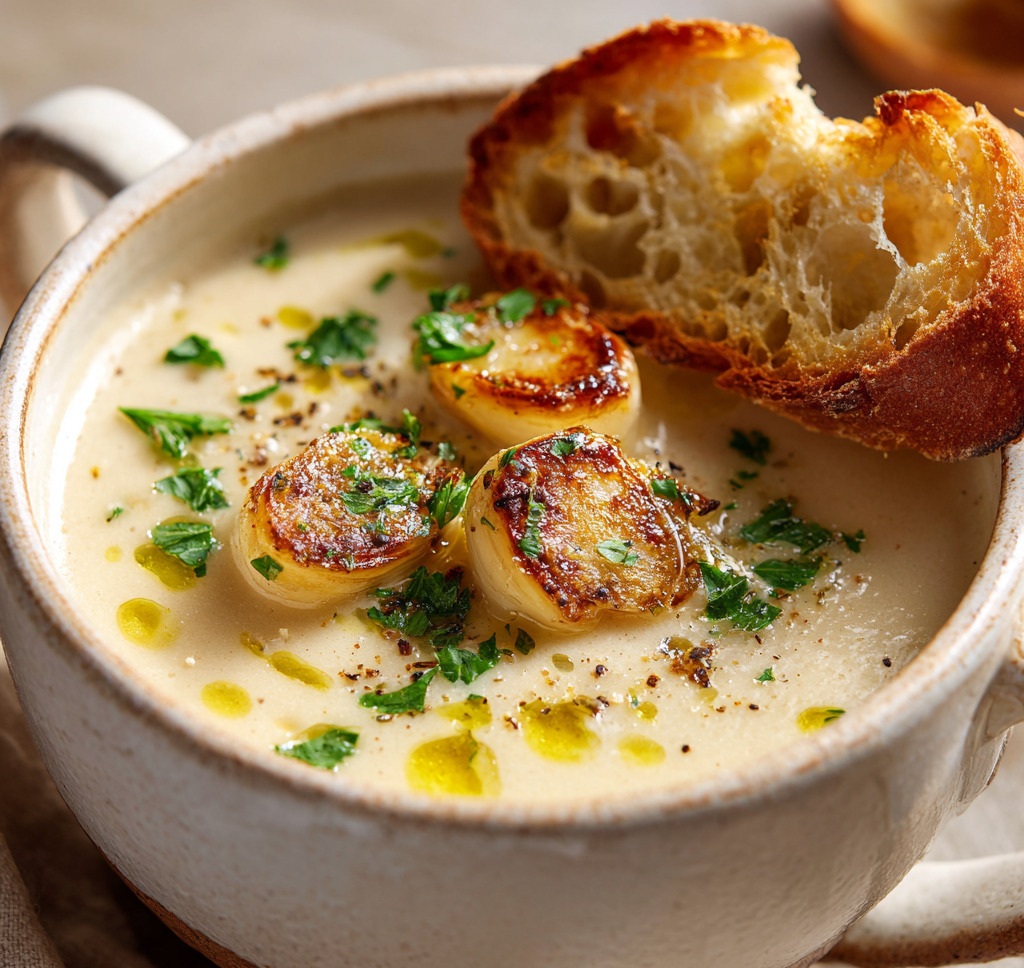
Key Ingredients
Garlic: The undisputed star. A full head is used, but blanching softens its sharpness and brings out natural sweetness. Removing the green sprouts keeps the flavor clean and free of bitterness.
Chicken stock or broth: The savory foundation of the soup. A good-quality homemade or low-sodium store-bought stock gives the best flavor and lets the garlic shine.
Fresh sage: Sage brings a warm, earthy, slightly peppery aroma. In Provençal tradition, sage is prized for both its flavor and its soothing qualities, and it pairs naturally with garlic.
Egg yolk: The key to the mayonnaise. Lecithin in the yolk acts as an emulsifier, binding the oil and liquid into a thick, creamy sauce that thickens and enriches the soup.
Olive oil: It gives the mayonnaise body and a fruity, peppery richness. A mild olive oil or a neutral oil like grapeseed keeps the flavor balanced and avoids bitterness.
Dijon mustard: It adds gentle tang and depth, and it also helps stabilize the emulsion so the mayonnaise comes together more easily.
Salt: A small pinch seasons the mayonnaise and sharpens all the flavors.
Expert Tips
Choose fresh, firm garlic: Look for plump heads with tight skins and no sprouting. Fresh garlic has a sweeter, cleaner flavor.
Don’t skip removing the sprouts: The green germ in older garlic can taste bitter and harsh, especially when you’re using this much.
Peel garlic easily: Soak the cloves in warm water for 5 minutes, or shake them vigorously between two bowls to loosen the skins.
Blanch for mellowness: For an even milder soup, blanch the garlic twice, changing the water each time.
Use room-temperature ingredients for the mayonnaise: A room-temperature egg yolk and oil emulsify more easily and reliably than cold ones.
Choose a mild oil: Strong extra-virgin olive oil can turn bitter when blended at high speed. Use a light olive oil, or mix half olive oil with half neutral oil.
Make mayonnaise by hand if needed: No immersion blender? Whisk the yolk, mustard, and salt together, then add the oil drop by drop at first, then in a thin stream, whisking constantly.
Fix broken mayonnaise: If it separates, place a fresh yolk (or a teaspoon of mustard) in a clean bowl and slowly whisk the broken mixture into it.
Remove the sage before blending or serving: Sage leaves can become bitter if left in too long. Lift them out once the broth is well flavored, or strain the soup.
Temper slowly: Add the hot broth to the mayonnaise a little at a time, stirring constantly, to gently warm the egg without scrambling it.
Keep the heat low at the end: Once the mayonnaise is added, never let the soup boil. Gentle heat keeps it smooth and silky.
Add a splash of acid: A few drops of lemon juice or white wine vinegar just before serving brightens the flavor beautifully.
French Garlic Soup
Ingredients
For the soup:
Chicken stock or broth: 64 oz (8 cups)
Fresh sage: 1 small bunch of leaves
Garlic: 1 large head, cloves peeled and cut in half
For the homemade mayonnaise:
Olive oil: ⅔ cup (or a mild oil such as grapeseed or sunflower)
Egg: 1 large, yolk and white kept separate
Dijon mustard: 1 teaspoon
Salt: a pinch
Instructions
1. Start the broth.
Pour the chicken stock into a large Dutch oven or stockpot and add the sage.
Heat over medium until it reaches a gentle simmer.
Prepare the garlic while it warms.
2. Prep the garlic.
Peel every clove and cut it in half from top to bottom.
Use the tip of a sharp knife or a toothpick to pull out the small green sprout in the center, since it can taste bitter in a dish with this much garlic.
3. Blanch the garlic.
Bring a small pot of water to a boil.
Drop in the garlic and cook for 3–4 minutes to soften and mellow it.
Drain and set aside.
4. Mash and simmer.
Press the softened garlic with the back of a fork until it becomes a smooth, fine paste.
Take your time here for the best texture.
Stir the paste into the simmering broth and let it cook gently for another 10 minutes.
5. Make the mayonnaise.
While the soup simmers, put the egg yolk, Dijon mustard, salt, and oil into a narrow jar that just fits an immersion blender.
Keep the egg white nearby in case you need it.
6. Blend until thick.
Set the immersion blender at the very bottom of the jar and blend for a few seconds without moving it.
As the mixture starts to thicken, slowly lift the blender upward.
If it doesn’t come together, add the egg white and blend again until the mayonnaise is thick and creamy.
7. Strain the soup (optional).
For an extra-smooth soup, pour the broth through a fine-mesh sieve and return it to the pot.
8. Temper and combine.
Stir a small ladle of the hot soup into the mayonnaise to warm it gradually.
Then slowly whisk the warmed mayonnaise into the pot, stirring the whole time so it blends in smoothly.
9. Heat gently.
Warm the soup over low heat just until it’s hot.
Don’t let it boil, or the mayonnaise may separate and curdle.
10. Serve.
Ladle into bowls while hot and finish with crunchy croutons, a drizzle of olive oil, a pinch of smoked paprika, and some fresh parsley if you like.
Important Notes When Making French Garlic Soup
Raw egg safety: The mayonnaise uses a raw egg yolk, and gentle warming may not fully cook it. Use pasteurized eggs if you’re serving young children, pregnant people, older adults, or anyone with a weakened immune system.
Never boil after adding the mayonnaise: High heat causes the egg to curdle, leaving the soup grainy and separated.
Garlic strength varies: Some garlic is much stronger than others. Taste the broth after adding the garlic paste and adjust with more broth if it’s too intense.
Broth quality matters: With so few ingredients, the stock defines the soup’s flavor. Use the best-quality stock you can, ideally homemade or low-sodium.
Season at the end: Store-bought broth can be salty. Taste the finished soup before adding any extra salt.
Best enjoyed fresh: Because of the emulsion, this soup is at its best right after it’s made.
Storage: Refrigerate leftovers in an airtight container for up to 2 days. The soup may thicken or separate slightly when chilled.
Reheating: Reheat very gently over low heat, whisking constantly. Do not microwave on high or bring to a boil.
Freezing: Not recommended once the mayonnaise is added, as it will separate. You can freeze the garlic-sage broth (before adding mayonnaise) for up to 3 months.
Allergens: This recipe contains egg and mustard.
How to Enjoy French Garlic Soup After Cooking
Serve it right away. French garlic soup is best enjoyed immediately, while it’s hot, silky, and fragrant. Warm your bowls beforehand so the soup stays at the perfect temperature.
Add classic toppings.
Crusty croutons: Toast cubes of baguette in olive oil until golden for crunch.
Garlic toast: Rub toasted bread slices with a raw garlic clove and float them in the bowl, a traditional French way to serve it.
A drizzle of olive oil: Adds richness and a glossy finish.
Smoked paprika: Gives a warm color and a subtle smoky note.
Fresh herbs: Chopped parsley, chives, or thyme for freshness.
Grated cheese: Gruyère, Comté, or Parmesan melts into the soup beautifully.
A poached egg: Turns the soup into a heartier, more filling meal.
Pair it thoughtfully.
Breads: Crusty French baguette, sourdough, or rustic country bread for dipping.
Salads: A simple green salad with Dijon vinaigrette, or a frisée salad with lardons.
Light mains: Roast chicken, grilled fish, quiche, or a cheese board.
Charcuterie: Cured ham, pâté, and cornichons create a classic French bistro spread.
Choose the right drink. A crisp dry white wine such as Sauvignon Blanc, a dry Provençal rosé, or a light Chardonnay pairs beautifully. For non-alcoholic options, try sparkling water with lemon or a warm herbal tea.
Enjoy it as a restorative meal. Following French tradition, enjoy a warm bowl when you’re feeling tired, chilled, or under the weather. Its gentle flavor and warmth make it especially soothing.
Serve it as an elegant first course. Present small portions in teacups or shallow bowls at a dinner party, topped with a single crouton and a sprinkle of herbs for a refined starter.
Store and reheat leftovers.
Refrigerate: Cool and store in an airtight container for up to 2 days.
Reheat gently: Warm over low heat, whisking constantly, until just heated through. Add a splash of broth if it thickens.
Avoid boiling: High heat will cause the soup to separate.
Nutrition Information
Estimated per serving, based on 6 servings (about 1⅓ cups each), made with regular store-bought chicken broth and mayonnaise using the egg yolk only. Croutons and toppings not included.
Calories: 248 kcal | Total Fat: 25.3 g | Saturated Fat: 3.8 g | Monounsaturated Fat: 18 g | Polyunsaturated Fat: 2.7 g | Cholesterol: 31 mg | Sodium: 1,150–1,250 mg (depending on broth and added salt) | Total Carbohydrates: 4.4 g | Dietary Fiber: 0.2 g | Sugars: 0.8 g | Protein: 3 g
Note: Using low-sodium broth lowers sodium to about 350–450 mg per serving. A serving of croutons (about ½ cup) adds roughly 60–90 calories.
Smart FAQs About This Recipe
Does the soup taste overpoweringly of garlic?
No. Blanching and simmering soften garlic’s sharp, pungent bite and bring out a sweet, nutty, mellow flavor. Removing the green sprouts also keeps it from tasting bitter.
Why is mayonnaise added to soup?
It’s a traditional French technique for thickening and enriching broth. The egg-and-oil emulsion gives the soup a silky, creamy texture without any cream, similar to how aioli is used in Provençal cooking.
Can I make it vegetarian?
Yes. Replace the chicken stock with a rich vegetable broth. Adding a parmesan rind or a few dried mushrooms while it simmers will boost the savory depth.
Is French garlic soup good for you when you’re sick?
It’s traditionally considered a comforting, restorative dish. Warm broth helps with hydration, and garlic contains natural compounds that many people value for wellness. While it’s not a medical treatment, it’s a soothing, easy-to-digest meal.
Can I use store-bought mayonnaise?
Yes, in a pinch. Use about ½ cup of good-quality mayonnaise and temper it the same way. Homemade gives a fresher, lighter flavor, but store-bought is convenient and has the advantage of using pasteurized eggs.
Why didn’t my mayonnaise thicken?
The most common causes are cold ingredients, a jar that’s too wide, or moving the blender too soon. Use room-temperature ingredients, a narrow jar, and keep the blender at the bottom until it starts to emulsify. Adding the egg white, as the recipe suggests, often rescues it.
My soup curdled. Can I fix it?
Remove it from the heat immediately. Blend it with an immersion blender for 20–30 seconds, which can often bring the emulsion back together. In the future, temper slowly and keep the soup below a simmer.
Do I have to strain the soup?
No, it’s optional. Straining gives a perfectly smooth, refined texture, while leaving it unstrained keeps a more rustic, garlicky character. You can also blend the soup for a creamy, smooth finish instead of straining.
Can I use roasted garlic instead of blanched garlic?
Yes. Roasted garlic gives a deeper, caramelized, slightly sweet flavor. Squeeze the soft roasted cloves out of their skins and mash them into a paste before adding them to the broth.
Can I make it ahead of time?
Make the garlic-sage broth up to 2 days ahead and refrigerate it. When ready to serve, reheat the broth, then make the mayonnaise fresh and temper it in just before serving for the best texture.