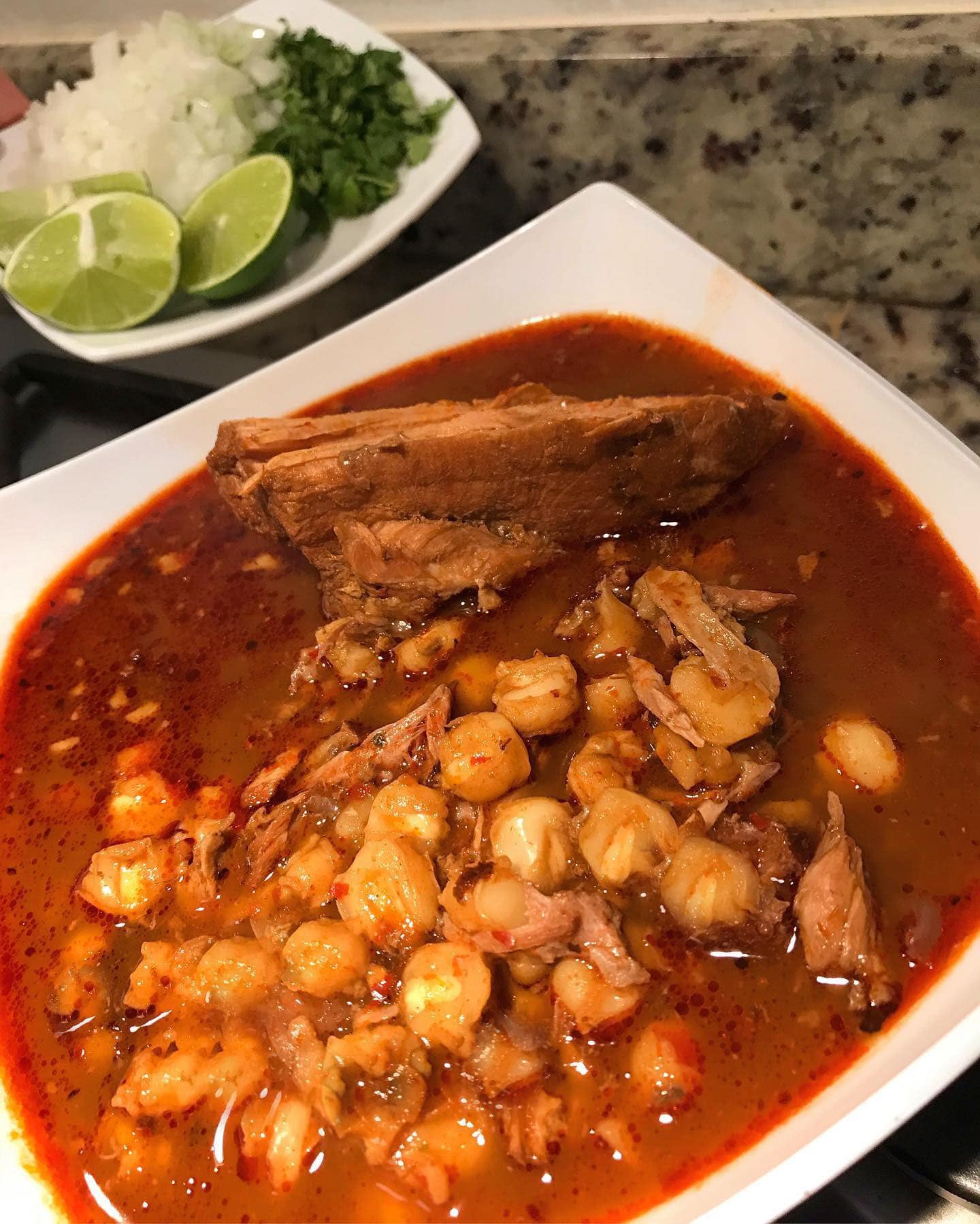
Colorado Pork Pozole Rojo
Colorado Pork Pozole Rojo is a rich, festive Mexican soup built on centuries of tradition. Despite its name, “Colorado” doesn’t refer to the U.S. state. In Spanish, colorado means “reddish” or “colored red,” and it describes the deep, brick-red chile colorado sauce that gives this pozole its signature color and flavor.
Pozole itself dates back to pre-Hispanic Mexico, where hominy (nixtamalized corn) was considered sacred and the soup was prepared for important ceremonies. Today, pozole rojo remains a centerpiece of celebrations like Mexican Independence Day, Christmas, New Year’s Eve, and family birthdays.
This recipe keeps the method simple while delivering deep, slow-cooked flavor. A whole pork butt simmers for hours with garlic, Mexican oregano, and low-sodium chicken stock until it becomes fork-tender and creates a rich, savory broth. The pork is then shredded and returned to the pot with earthy chile colorado sauce and plump white hominy. To finish, homemade crispy tortilla strips and a colorful spread of fresh garnishes (crunchy radishes, sharp onion, bright lime, creamy queso fresco, and fragrant oregano) let everyone build their own perfect bowl. It’s warm, hearty, celebratory, and made for sharing.
Why People Will Love Colorado Pork Pozole Rojo Recipe
Rich, festive tradition: Pozole rojo is a beloved Mexican celebration dish full of history and meaning.
Melt-in-your-mouth pork: Three hours of gentle simmering turn pork butt into tender, juicy shreds.
Deep, savory broth: Pork, garlic, oregano, and chicken stock create a broth with rich, slow-cooked flavor.
Bold chile colorado flavor: The red chile sauce adds earthy, mildly spicy, slightly smoky depth and a gorgeous color.
Simplified method: Using canned chile colorado sauce saves time without sacrificing authentic flavor.
Hearty hominy: Chewy, slightly nutty hominy makes every spoonful satisfying.
Homemade crispy tortilla strips: Golden, crunchy strips add irresistible texture and flavor.
Fresh, colorful garnishes: Radishes, onion, lime, queso fresco, and oregano add brightness and crunch.
Interactive and fun: Guests customize their own bowls, making it perfect for gatherings.
Feeds a crowd: A 6-pound pork butt makes a big pot, ideal for parties and holidays.
Mostly hands-off: Once it’s simmering, the pot does most of the work.
Even better the next day: The flavors deepen overnight, making leftovers delicious.
Mild, family-friendly heat: The chile sauce adds warmth without being too spicy.
Key Ingredients
Boneless pork butt: Also called pork shoulder, this well-marbled cut is perfect for long simmering. Its fat and connective tissue melt slowly, producing tender, juicy meat and a rich, flavorful broth.
Low-sodium chicken stock: It adds savory depth to the broth while giving you control over the salt.
Garlic: A whole head simmers with the pork, mellowing into a sweet, aromatic flavor that infuses the broth.
Mexican oregano: More citrusy and earthy than Mediterranean oregano, it’s essential to authentic pozole flavor. Using whole dried leaves and crushing them adds fresh aroma.
Chile colorado sauce: The heart of this pozole. Made from dried red chiles like guajillo and New Mexico chiles, it adds earthy, mildly spicy, slightly smoky flavor and the soup’s signature deep red color.
White hominy: Corn kernels treated through nixtamalization, which makes them swell and develop a chewy texture and distinctive, slightly nutty flavor. Hominy is what makes pozole, pozole.
Salt: Essential for seasoning the pork and broth and bringing out all the flavors.
Corn tortillas: Cut into strips and fried until golden, they become a crispy, salty garnish that adds texture.
White onion: Finely diced raw onion adds a sharp, fresh bite that cuts through the rich broth.
Radishes: Thinly sliced radishes bring crisp texture and peppery freshness.
Lime wedges: A squeeze of lime brightens the broth and balances its richness.
Queso fresco: Mild, salty, and crumbly, it adds creamy richness to each bowl.
Expert Tips
Cut the pork into large chunks: Cutting the pork butt into 3–4 large pieces helps it cook faster and more evenly.
Brown the pork first: Searing the pork in a little oil before adding liquid creates a caramelized crust and deeper flavor.
Skim patiently: Removing the foam during the first boil keeps the broth clean and clear.
Keep it at a gentle simmer: A hard boil can make the pork tough. Small, steady bubbles produce the most tender meat.
Crush the oregano: Rub the dried oregano between your palms as you add it to release its aromatic oils.
Skim the fat: Pork butt releases a lot of fat. Skim it from the surface before adding the hominy and chile sauce for a lighter broth.
Remove excess fat when shredding: Discard large pieces of fat as you shred the pork.
Rinse the hominy: Rinsing canned hominy removes the starchy, salty liquid and gives a cleaner flavor.
Upgrade the chile sauce: For more depth, blend a few soaked guajillo or ancho chiles into the canned sauce, or add a pinch of cumin.
Make your own chile sauce: Soak 8–10 dried guajillo and New Mexico chiles in hot water, then blend with garlic and broth and strain for an authentic homemade sauce.
Fry tortilla strips at the right temperature: The oil should shimmer but not smoke, about 350°F (175°C). If it smokes, lower the heat.
Fry in small batches: Crowding the skillet lowers the oil temperature and makes the strips soggy.
Salt the strips immediately: Seasoning them while hot helps the salt stick.
Make it a day ahead: Refrigerating overnight deepens the flavor and makes it easy to remove the hardened fat from the top.
Colorado Pork Pozole Rojo
Ingredients
For the pozole:
Boneless pork butt (pork shoulder): 1 roast, about 6 pounds
Low-sodium chicken stock: 1 quart
Water: 3 quarts
Garlic: 1 head, cloves separated and peeled
Salt: 2 teaspoons, plus more for the tortilla strips
Mexican oregano: 1 teaspoon, dried whole leaves
Canned chile colorado sauce: 2½ cups
White hominy: 3 cans (15 oz each), drained
For the toppings:
Vegetable oil: for frying
Corn tortillas: 8, sliced into thin strips
White onion: finely diced
Radishes: thinly sliced
Limes: cut into wedges
Queso fresco: crumbled
Mexican oregano: dried whole leaves
Instructions
Step 1: Simmer the pork.
Place the pork in a large, heavy stockpot or Dutch oven.
Add the water, chicken stock, garlic, and 1 teaspoon of salt, then bring to a boil.
Skim off any foam that collects on the surface and discard it.
Stir in the oregano, lower the heat, and let the pork simmer gently, uncovered, for about 3 hours, until it’s very tender.
Step 2: Shred the pork.
Lift the pork out of the pot and set it on a cutting board.
Pull it apart into shreds with two forks, then return it to the broth.
Stir in the chile colorado sauce, the hominy, and the remaining 1 teaspoon of salt.
Step 3: Simmer the pozole.
Bring the pot back to a boil, then turn the heat down and let it simmer for 30 minutes so the flavors blend.
Step 4: Fry the tortilla strips.
While the pozole simmers, cover a baking sheet with paper towels.
Heat about ½ inch of vegetable oil in a large skillet over medium-high heat.
When the oil shimmers but isn’t smoking (lower the heat if it starts to smoke), fry the tortilla strips in small batches so the pan isn’t crowded.
Cook each batch for about 3 minutes, until golden and crisp.
Move the strips to the paper towels to drain and sprinkle them lightly with salt while still hot.
Step 5: Serve.
Ladle the pozole into bowls and serve with the crispy tortilla strips.
Set out bowls of onion, radishes, lime wedges, queso fresco, and oregano so everyone can add their own toppings.
Important Notes When Making Colorado Pork Pozole Rojo
“Colorado” means red: In this recipe, “colorado” refers to the red chile sauce, not the U.S. state.
Use a large pot: With 4 quarts of liquid and a 6-pound pork butt, you’ll need at least a 10–12 quart stockpot or Dutch oven.
Cooking time varies: Depending on the size of the pork, it may take more or less than 3 hours to become fork-tender.
Check the liquid level: Since the pork simmers uncovered, add hot water as needed to keep it mostly submerged.
Chile sauce brands vary: Some are spicier or saltier than others. Taste the pozole before adding the second teaspoon of salt.
Watch the salt: Chile sauce, hominy, queso fresco, and salted tortilla strips all add sodium. Season gradually.
Frying safety: Never leave hot oil unattended, and keep a lid nearby in case of flare-ups.
Storage: Refrigerate pozole in airtight containers for up to 4–5 days. Store garnishes separately.
Tortilla strips storage: Keep fried tortilla strips in an airtight container at room temperature for up to 2–3 days.
Freezing: Pozole freezes very well for up to 3 months. Freeze without garnishes, and thaw overnight in the fridge.
Dietary notes: It’s naturally gluten-free when made with corn tortillas and gluten-free stock. Check labels on canned chile sauce.
Allergens: The queso fresco garnish contains dairy.
How to Enjoy Colorado Pork Pozole Rojo After Cooking
Serve it piping hot. Ladle the pozole into large, deep bowls, making sure each serving has plenty of shredded pork, hominy, and rich red broth.
Set up a garnish bar. Arrange the toppings in small bowls so everyone can customize their own:
Crispy tortilla strips for crunch
Finely diced white onion
Thinly sliced radishes
Lime wedges
Crumbled queso fresco
Dried Mexican oregano, crushed between your fingers
Shredded cabbage or lettuce
Chopped fresh cilantro
Sliced avocado
Chile flakes, chile piquín, or hot sauce for extra heat
Pair with traditional sides.
Tostadas: Crispy tostadas spread with crema or refried beans are a classic companion.
Warm corn tortillas: For dipping or making mini pork tacos.
Flautas or taquitos: A popular side at pozole gatherings.
Mexican rice: For an even heartier meal.
Refried beans: Comforting and filling.
Make it a celebration. Serve pozole buffet-style for holidays and parties. Keep it warm on the stove or in a large slow cooker, and let guests serve themselves throughout the evening.
Pair with drinks. Mexican beer, Michelada, agua de jamaica, horchata, tamarind agua fresca, or lime soda all complement the warm, chile-rich broth.
Store and reheat leftovers.
Refrigerate: Cool completely and store in airtight containers for up to 4–5 days.
Stovetop: Reheat over medium heat until steaming, adding water or broth if it has thickened.
Microwave: Heat individual servings in 1–2 minute intervals, stirring between each.
Freeze: Portion into freezer-safe containers for up to 3 months.
Re-crisp tortilla strips: Warm them in a 350°F (175°C) oven or air fryer for 2–3 minutes.
Repurpose leftovers.
Strain the pork and use it for tacos, tostadas, burritos, or enchiladas.
Serve the broth and hominy over rice for a cozy meal.
Top with a fried egg for a hearty Mexican breakfast.
Nutrition Information
Estimated per serving, based on 12 servings (about 2 cups each), made with a 6-pound pork butt with some fat skimmed, low-sodium chicken stock, canned chile colorado sauce, drained hominy, and 2 teaspoons of salt. Garnishes not included.
Calories: 510 kcal | Total Fat: 28.7 g | Saturated Fat: 9.8 g | Monounsaturated Fat: 12.5 g | Polyunsaturated Fat: 3.4 g | Cholesterol: 163 mg | Sodium: 950–1,150 mg (depending on chile sauce brand and added salt) | Total Carbohydrates: 14.4 g | Dietary Fiber: 2.7 g | Sugars: 1 g | Protein: 42.4 g
Note: Fried tortilla strips add about 65 calories per serving, and 2 tablespoons of queso fresco add about 40 calories. Skimming more fat from the broth or trimming the pork well can lower each serving by 50–100 calories.
Smart FAQs About This Recipe
Why is it called “Colorado” pozole?
“Colorado” is Spanish for “reddish.” It refers to the red chile colorado sauce used to flavor and color the soup, not to the U.S. state.
Is this pozole spicy?
It’s usually mild to medium. Chile colorado sauce is more earthy and flavorful than hot. For more heat, add chiles de árbol or serve with hot sauce and chile flakes on the side.
What’s the difference between pozole rojo, verde, and blanco?
Pozole rojo uses a red chile sauce, pozole verde uses tomatillos, green chiles, and pumpkin seeds, and pozole blanco is a clear broth seasoned at the table with salsas and garnishes.
Can I use chicken instead of pork?
Yes. Use bone-in chicken thighs and breasts and simmer for 45–60 minutes until tender. The broth will be lighter but still delicious.
Is pozole healthy?
It’s high in protein, contains fiber from the hominy, and is loaded with fresh vegetables from the garnishes. To make it lighter, trim the pork well, skim the fat, rinse the hominy, and go easy on the fried tortilla strips.
Can I make pozole in a slow cooker or Instant Pot?
Yes. In a slow cooker, cook the pork, garlic, oregano, stock, water, and salt on low for 8–10 hours or high for 5–6 hours. Shred the pork, then add the chile sauce and hominy and cook on high for 30–60 minutes. In an Instant Pot, cut the pork into chunks and pressure cook with the liquids and seasonings for 60–75 minutes with a natural release, then shred and simmer with the chile sauce and hominy on sauté mode.
Can I make my own chile colorado sauce?
Absolutely. Remove the stems and seeds from 8–10 dried guajillo and New Mexico chiles, soak them in hot water for 20–30 minutes, then blend with 2 garlic cloves, a little broth, salt, and a pinch of cumin. Strain the sauce before adding it to the pozole.
Can I bake the tortilla strips instead of frying?
Yes. Toss the strips with a little oil and salt, spread them on a baking sheet, and bake at 400°F (200°C) for 8–12 minutes, stirring halfway, until golden and crisp.
How do I know when the pork is done?
The pork is ready when it’s fork-tender and pulls apart easily with little resistance. If it still feels firm, keep simmering and check every 20–30 minutes.
Can I make pozole ahead of time?
Yes. Pozole is ideal for making 1–2 days ahead. Cool it, refrigerate it, and remove the hardened fat from the surface before reheating. Prepare the garnishes and tortilla strips on the day you serve it.