Delish Mexican Picadillo
Picadillo is one of the most loved home-cooked dishes in Mexico. The name comes from the Spanish word picar, “to chop” or “to mince.” It’s the kind of everyday meal families make on weeknights, pack into school lunches, and fold into tacos for a crowd.
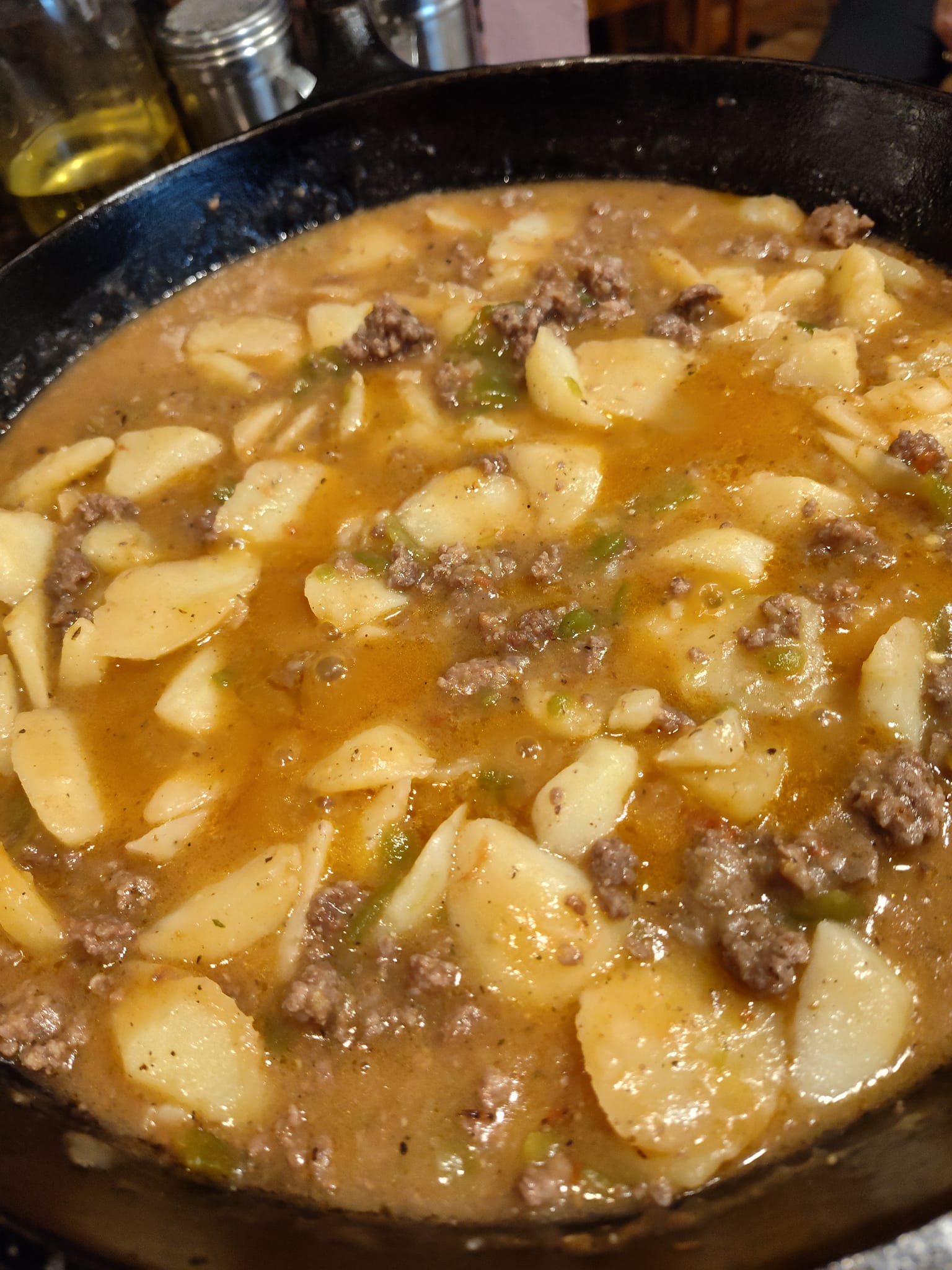
Every region and every household has its own version. Some add carrots or peas, others raisins and olives. This version stays close to the rustic, homestyle roots. Ground beef and tender potatoes simmer in a sauce of fire-charred tomatoes, jalapeños, serrano and garlic.
Charring the vegetables first makes the sauce smoky and slightly sweet, with a spicy depth that raw ingredients can’t match. The result is humble, hearty and full of flavor, and it’s one of those recipes that tastes like home even the first time you make it.
Why People Will Love This Recipe
It tastes like real Mexican home cooking. This isn’t a seasoning-packet shortcut. It’s the way abuelas have made picadillo for generations, with fresh chiles and a hand-blended sauce.
Charring adds smoky flavor. Blistering the tomatoes, peppers and garlic brings out their natural sugars and adds a light, grill-like smokiness.
The heat is lively but balanced. Three jalapeños and a serrano give a noticeable kick, while the potatoes and beef keep it from being overwhelming.
Beef and potatoes are a classic comfort pairing. The potatoes soak up the sauce and turn soft and flavorful, and they stretch the meat so it feeds more people.
The ingredient list is short and simple. You only need about ten everyday ingredients, with no hard-to-find spices.
One batch can become many meals. Serve it with rice, roll it into burritos, stuff it into tacos, gorditas, empanadas or peppers, or spoon it over tostadas.
It’s quick enough for a weeknight. Dinner is ready in about 40 minutes with very little hands-on work.
It’s budget-friendly. Ground beef, potatoes and a few chiles feed a whole family for very little.
It tastes even better the next day. The flavors deepen overnight, so it’s great for leftovers and meal prep.
It’s naturally gluten-free. There’s no flour or breadcrumbs, so it suits many diets without any changes.
Key Ingredients
Ground beef (80/20): The fat in 80/20 beef carries flavor and keeps the meat juicy. Leaner beef can turn dry and crumbly. Draining only some of the fat keeps the richness without making it greasy.
Potatoes: They’re the traditional partner to beef in picadillo. Cut into ½-inch cubes, they cook evenly, hold their shape and soak up the sauce. Yukon Golds stay creamy and firm, and russets break down a little more, which thickens the sauce.
Roma tomatoes: Romas are meaty with fewer seeds and less water, so they make a thicker, richer sauce. Charring them deepens their sweetness and adds a gentle smokiness.
Jalapeños: They give a bright, grassy heat. Roasting softens the sharpness and brings out a fruity flavor. For less heat, remove the seeds and ribs before blending.
Serrano pepper: It’s hotter and sharper than a jalapeño and adds a clean heat that lifts the whole sauce. One is enough to make a difference.
Garlic: Roasting turns the garlic mellow, sweet and nutty instead of harsh, and it gives the sauce a savory backbone.
Onion: Diced onion cooks with the potatoes, softening into sweet bites that balance the heat of the chiles.
Salt and black pepper: Simple seasoning lets the charred vegetables and beef shine. Salt also brings out the natural sweetness of the tomatoes.
Water: A small splash helps the blender turn the roasted vegetables into a smooth sauce and gives the potatoes enough liquid to steam until tender.
Oil: Just a teaspoon keeps the vegetables from sticking while they blister.
Expert Tips
Char the vegetables boldly. Don’t be afraid of black spots, because that’s where the smoky flavor comes from. Use a cast-iron or heavy skillet, or put the vegetables on a comal or directly over a gas flame.
Take the garlic out early. The cloves are small and burn fast. Pull them out as soon as they’re golden with a few brown spots, or burnt garlic will make the sauce bitter.
Taste a roasted chile before blending. Jalapeños and serranos vary a lot in heat. If they’re very hot, blend one or two at a time and taste as you go.
Control the heat with the seeds and ribs. Most of the heat is in the white membranes. Remove them for a milder sauce, or leave them in for the full kick.
Brown the beef properly. Spread it out in a hot pan and let it sit for a minute or two before breaking it up. Browning builds deep, savory flavor, and stirring too soon makes the meat steam and turn gray.
Break the beef into small crumbles. Picadillo means “finely chopped,” so a potato masher or wooden spoon helps you get the classic fine texture.
Keep the potato cubes the same size. Even ½-inch cubes cook at the same speed, so none end up mushy while others stay hard.
Rinse the cut potatoes. A quick rinse washes off surface starch, so the cubes don’t stick together and the sauce stays clean.
Keep the lid on while it simmers. Covering the pan traps steam, which cooks the potatoes all the way through. If the sauce gets too thick, add a splash of water.
Finish with something fresh. Chopped cilantro and a squeeze of lime just before serving brighten all the rich, smoky flavors.
Try a pinch of cumin or Mexican oregano. They’re not in the original recipe, but many Mexican cooks add one or the other for extra warmth.
Authentic Mexican Picadillo
Ingredients
1½ lbs ground beef (80/20)
2 medium potatoes, peeled and cut into ½-inch cubes
½ cup diced onion
1 teaspoon salt
1 teaspoon black pepper
2 Roma tomatoes, left whole
3 jalapeños, stems removed
1 serrano pepper, stem removed
2 garlic cloves, peeled
¼ cup water
1 teaspoon oil
Instructions
Char the vegetables
Heat the oil in a small skillet over medium heat.
Add the whole tomatoes, jalapeños, serrano and garlic. Cook, turning now and then, until the skins are blistered and blackened in spots on all sides.
Make the sauce
Put the charred vegetables in a blender with the water and blend until smooth. Set aside.
Brown the beef
In a large skillet over medium-high heat, cook the ground beef until browned and cooked through.
Season with the salt and pepper, and drain off excess fat if needed.
Add the potatoes and onion
Stir the potatoes and onion into the beef and cook for 5–7 minutes, until the potatoes start to soften.
Simmer in the sauce
Pour in the sauce and stir to coat everything.
Turn the heat to low, cover, and simmer for 15–20 minutes, until the potatoes are fork-tender.
Stir occasionally so nothing sticks.
Season to taste
Taste and add more salt or pepper if needed.
Serve
Serve hot with warm tortillas or rice, or use it as a filling for tacos or stuffed peppers.
The garlic cloves burn faster than the rest, so take them out of the pan as soon as they’re golden.
Important Notes When Making Delish Mexican Picadillo
Handle the chiles carefully. The oils in jalapeños and serranos can burn your skin and eyes. Wear gloves, or wash your hands well after handling them, and don’t touch your face.
Ventilate while charring. Roasting chiles releases spicy fumes that can make you cough or sneeze. Turn on the range hood or open a window.
Be careful blending hot vegetables. Steam builds pressure in a blender. Let them cool for a few minutes, fill the blender no more than halfway, and hold the lid with a kitchen towel.
Cook the beef thoroughly. Ground beef should reach 160°F (71°C), with no pink left.
Check that the potatoes are fully tender. Undercooked potatoes are hard and starchy. Test with a fork before serving. Depending on size, they may need a few more minutes.
Adjust the heat for your table. As written, the dish is moderately spicy. For kids or guests who don’t like spice, use 1–2 jalapeños and leave out the serrano.
Salt in stages. Season the beef as directed, then taste only at the end, after the potatoes have soaked up the sauce.
The dish is naturally gluten-free and dairy-free, as long as any toppings or sides you add are too.
Storage: Refrigerate leftovers in an airtight container for up to 4 days. Picadillo freezes well for up to 3 months, though the potatoes may soften a little after thawing.
Reheating: Warm it on the stovetop with a splash of water or broth so it doesn’t dry out.
How to Enjoy Delish Mexican Picadillo After Cooking
Serve it hot. Picadillo tastes best hot from the pan, when the sauce is glossy and the potatoes are soft. Let it rest for 2–3 minutes off the heat so the sauce settles and thickens a little.
Try it in different ways.
As a plate: Spoon it beside Mexican red rice and refried or pinto beans, with warm corn or flour tortillas for scooping. This is the classic family-style meal.
In tacos: Fill warm corn tortillas and top them with diced onion, cilantro and a squeeze of lime.
Tacos dorados: Fill tortillas, fold or roll them, and pan-fry until crispy. Top with lettuce, crema and queso fresco.
Burritos: Wrap it in a large flour tortilla with rice, beans and cheese.
Gorditas or sopes: Stuff or top thick masa cakes for a street-food-style meal.
Stuffed peppers: Fill roasted poblanos or bell peppers, top with cheese, and bake until bubbly.
Empanadas: Use cooled picadillo as a savory filling.
Tostadas: Spread it on crispy tostadas with shredded lettuce and salsa.
Breakfast: Reheat leftovers and top them with a fried egg, or scramble them into eggs for breakfast tacos.
Add toppings.
Crumbled queso fresco or cotija
Mexican crema or sour cream
Sliced avocado or guacamole
Chopped cilantro and white onion
Pickled jalapeños or red onions
A squeeze of lime
Your favorite salsa verde or salsa roja
Choose a drink.
Agua fresca, such as horchata, jamaica or tamarindo
An ice-cold Mexican lager with lime
Mexican Coca-Cola, Jarritos or sparkling water with lime
Cold milk or horchata to tame the heat
Enjoy the leftovers. Picadillo is often better on the second day. Reheat it gently with a splash of water, stirring until hot. It also makes great lunches and freezer-friendly taco filling.
Nutrition Information (Estimated, Per Serving)
These estimates assume 6 servings, with some of the beef fat drained.
Calories: 320 kcal | Total Fat: 19 g | Saturated Fat: 7.1 g | Monounsaturated Fat: 8.5 g | Polyunsaturated Fat: 0.9 g | Cholesterol: 78 mg | Sodium: 450–500 mg (depending on added salt) | Total Carbohydrates: 14.6 g | Dietary Fiber: 1.6 g | Sugars: 1.9 g | Protein: 20 g
Smart FAQs About This Recipe
What does “picadillo” mean, and is it only Mexican?
Picadillo comes from the Spanish verb picar, “to chop or mince.” It’s eaten across Latin America and in the Philippines and Spain, and each version is different. Cuban picadillo often has olives and raisins, and Filipino giniling has peas and carrots. Mexican homestyle picadillo, like this one, centers on tomatoes, chiles and potatoes.
Is this picadillo very spicy?
It has a medium heat. Three jalapeños and a serrano give a clear kick, but the potatoes and beef soften it. For a milder version, seed the chiles or use fewer. For more heat, add a second serrano.
Can I use ground turkey, chicken or pork instead of beef?
Yes. Ground pork is common in Mexico and gives a slightly sweeter, richer flavor. A 50/50 mix of beef and pork is especially good. Turkey or chicken makes a lighter version, but add a little extra oil when browning and season a bit more, since they’re milder.
Can I add other vegetables?
Yes. Diced carrots are a very common addition. Add them with the potatoes. Peas, zucchini or corn can go in during the last 5–10 minutes. Many families add whatever vegetables they have on hand.
Is this recipe good for meal prep?
Very. Picadillo keeps well in the fridge for up to 4 days and in the freezer for up to 3 months. The flavors deepen as it sits, and you can turn one batch into tacos, burritos, bowls or stuffed peppers through the week.
Why do I char the vegetables instead of using them raw?
Charring caramelizes the natural sugars in the tomatoes, mellows the garlic and softens the sharp heat of the chiles. It also adds a smoky depth. A raw sauce tastes brighter but flatter, while a charred sauce tastes rounder, sweeter and more complex.
Do I need to peel the tomatoes and chiles after roasting?
No. Blended into the sauce, the charred skins add smoky flavor and color. If you find the sauce bitter or want it very smooth, you can rub off the most blackened bits before blending.
My potatoes are still hard after 20 minutes. What should I do?
Keep simmering, covered, for another 5–10 minutes, and add a splash of water if the sauce is getting thick. Larger cubes or waxy potatoes can take longer. Next time, cut the cubes a little smaller or cook them a few minutes longer before adding the sauce.
Should I drain the fat from the beef?
It depends on your taste. With 80/20 beef, draining most of the fat keeps the dish from being greasy. Leaving a tablespoon or two adds flavor and helps the potatoes brown. If you use lean beef (90/10 or leaner), you probably won’t need to drain anything.
Can I make picadillo without a blender?
Yes. Finely chop the charred tomatoes, chiles and garlic by hand, or mash them in a molcajete (Mexican mortar and pestle) for an even more traditional texture. The sauce will be chunkier and more rustic, but the flavor will be just as good.