Birria De Res
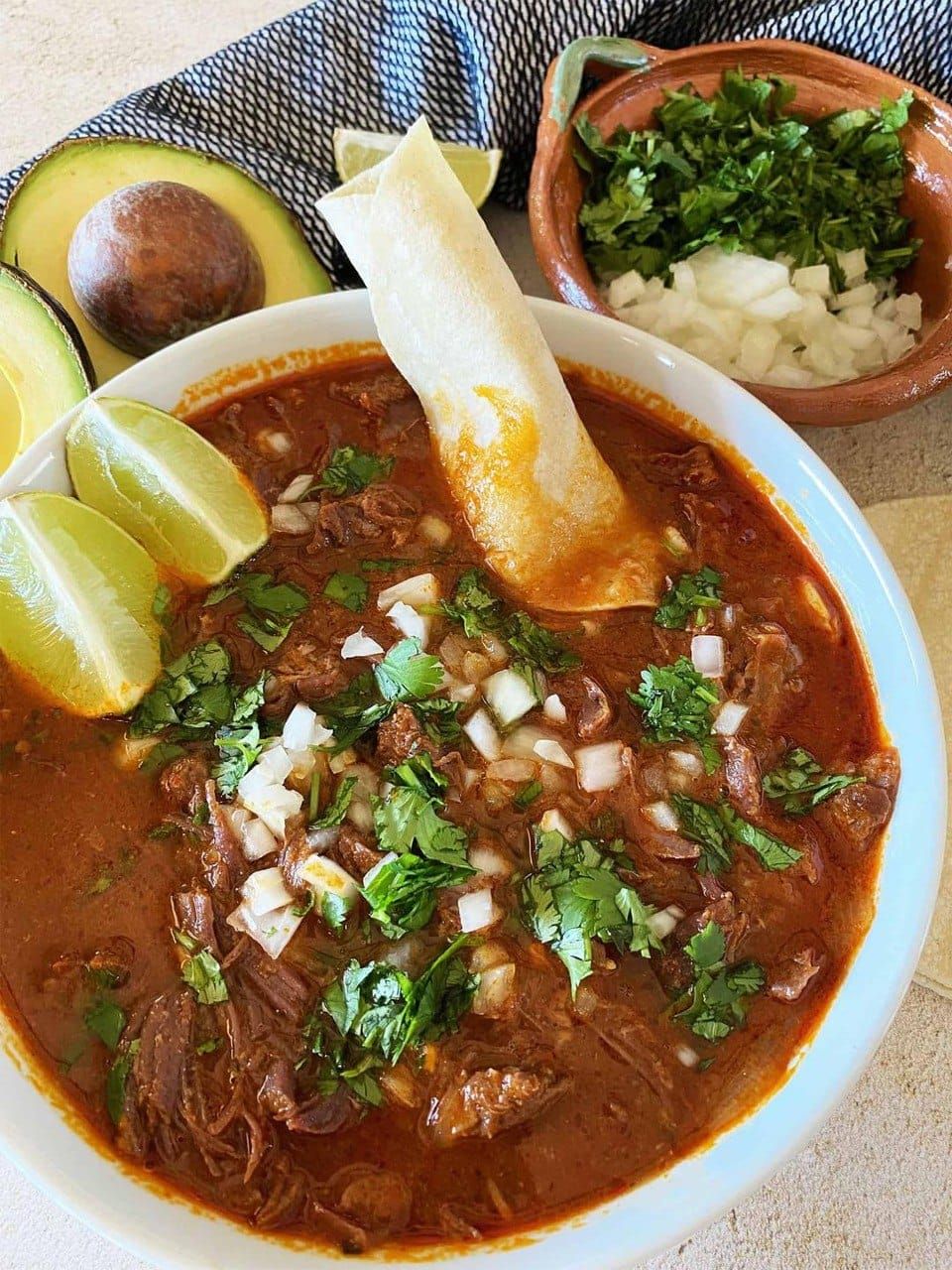
Birria de Res is a slow-simmered Mexican beef stew with deep roots in the state of Jalisco, where birria has been a celebration dish for centuries. Traditionally made with goat, it was originally prepared for weddings, baptisms, and holidays, cooked slowly until the meat became meltingly tender.
Over time, beef (res) became a beloved alternative, and today birria de res is famous around the world, especially in the form of crispy, cheese-filled quesabirria tacos dunked into rich consomé.
What makes birria unforgettable is its sauce. Dried guajillo chiles are soaked and blended with garlic, ginger, cinnamon, cloves, bay leaves, peppercorns, and marjoram, creating a brick-red adobo that’s smoky, earthy, warmly spiced, and gently tangy. As the chuck roast simmers in this sauce with tomatoes and a splash of vinegar, the meat absorbs every layer of flavor and the cooking liquid becomes a deeply savory broth. The result is tender, shreddable beef and a flavorful consomé that’s comforting, aromatic, and perfect for sharing.
Why People Will Love Birria De Res Recipe
Fall-apart tender beef: Slow simmering breaks down the chuck roast until it shreds effortlessly with a fork.
Rich, complex chile flavor: Guajillo chiles bring a mild, fruity, slightly smoky heat that tastes deep and layered rather than fiery.
Warm, aromatic spices: Cinnamon, cloves, ginger, bay leaves, and marjoram give the stew a cozy, fragrant character that sets it apart from ordinary beef stews.
Two dishes in one: You get tender shredded beef and a flavorful consomé, perfect for both tacos and soup.
The base for famous quesabirria tacos: It’s the key to the viral crispy, cheesy tacos dipped in broth.
Authentic homestyle cooking: This recipe reflects how birria is made in Mexican family kitchens, with simple ingredients and lots of flavor.
Mild and family-friendly: Seeded guajillo chiles are gentle, so the stew is flavorful without being too spicy.
Budget-friendly: Chuck roast is an affordable cut that transforms into something luxurious with slow cooking.
Perfect for gatherings: A big pot feeds a crowd and is ideal for celebrations, holidays, and weekend family meals.
Even better the next day: The flavors deepen overnight, making leftovers incredibly delicious.
Endlessly versatile: Serve it as a stew, in tacos, burritos, tortas, quesadillas, ramen, or over rice.

Key Ingredients
Chuck roast: The ideal cut for birria. Its marbling and connective tissue melt during long cooking, producing tender, juicy meat and a rich, full-bodied broth.
Guajillo chiles: The heart of the sauce. These dried chiles have smooth, deep red skin and a mild-to-medium heat with fruity, slightly tangy, berry-like notes. They give birria its signature color and flavor.
Garlic: Adds savory, aromatic depth to the chile sauce.
Fresh ginger: A less common but traditional touch in some regional birrias, it adds a subtle, warm, peppery brightness that lifts the rich sauce.
Cinnamon: A small amount of Mexican cinnamon (canela) adds gentle sweetness and warmth that balances the chiles. Using just a few thin strips keeps it subtle.
Whole cloves and black peppercorns: These add warm, slightly pungent spice notes that give birria its distinctive aromatic character.
Bay leaves and dried marjoram: These herbs bring earthy, slightly floral notes that round out the spice blend.
Canned tomatoes: They add body, natural sweetness, and gentle acidity to the broth.
Vinegar: A splash adds tang that brightens the rich flavors and helps tenderize the meat. It’s a classic element of birria’s adobo.
Salt: Essential for seasoning and drawing out the beef’s natural flavor.
Expert Tips
Toast the chiles first: Before soaking, lightly toast the seeded guajillos in a dry skillet for 15–30 seconds per side, just until fragrant. This deepens their flavor. Don’t let them burn, or they’ll turn bitter.
Taste the soaking water: Chile soaking water can sometimes be bitter. Taste it first; if bitter, use fresh water or broth for blending instead.
Remove the seeds and veins thoroughly: This keeps the sauce smooth and mild and reduces bitterness.
Sear the beef first: Browning the chuck chunks in a little oil before boiling adds a deeper, roasted flavor to both the meat and the broth.
Skim the foam: As the meat comes to a boil, skim off the gray foam that rises to the top for a cleaner, clearer consomé.
Toast the whole spices: Briefly warming the cloves, peppercorns, and cinnamon in a dry pan before blending releases their essential oils and intensifies the aroma.
Blend thoroughly: Blend the sauce for at least 1–2 minutes until completely smooth for the silkiest broth.
Always strain the sauce: Straining removes tough chile skins and spice bits, giving the consomé a smooth, refined texture.
Use mild vinegar: Apple cider vinegar or white vinegar both work well. Add a little at a time and taste.
Keep it at a gentle simmer: A low, steady simmer makes the meat tender. Hard boiling can make it tough.
Save the fat: The red-tinged fat that rises to the top is perfect for frying tortillas for quesabirria tacos. Skim it off and keep it.
Make it a day ahead: Chill the birria overnight to let the flavors deepen and make it easy to remove excess fat from the surface.
Add more chile varieties for depth: For a more complex flavor, try adding 2–3 ancho chiles for sweetness or a few chiles de árbol for heat.
How to make Birria De Res
Ingredients
For the chile sauce:
Guajillo chiles (or wide dried red chiles): 13, seeds removed
Garlic: 3 cloves
Bay leaves: 4
Cinnamon: 4 thin strips, peeled from a whole cinnamon stick (not 4 whole sticks)
Fresh ginger: 1 small piece
Black peppercorns, dried marjoram, and whole cloves: a small three-finger pinch of each
For the stew:
Chuck roast: cut into large chunks
Canned tomatoes: 1–2 cans
Vinegar: a splash
Salt: to taste
Water: as needed
Instructions
1. Start the meat.
Place the chuck roast chunks in a large pot, cover with water, and bring to a boil.
2. Soften the chiles.
While the meat cooks, remove the seeds from the guajillo chiles.
Put them in a bowl, pour hot water over them, and cover.
Let them soak for about 20 minutes, until soft and pliable.
3. Blend the sauce.
When the meat is about halfway cooked, add the softened chiles, garlic, bay leaves, cinnamon, ginger, peppercorns, marjoram, and cloves to a blender.
Pour in a little less than half a blender of water (you can use the soaking water from the chiles).
Blend until completely smooth.
4. Strain into the pot.
Pour the sauce through a strainer directly into the pot with the meat.
Press the pulp with a spoon to push through as much liquid as possible, then discard what’s left in the strainer.
5. Season the stew.
Stir in one or two cans of tomatoes, a splash of vinegar, and salt to taste.
Adjust the liquid so it just covers the meat.
6. Simmer until tender.
Let the birria keep cooking so the meat absorbs all the chile and spice flavors.
It’s ready when the beef pulls apart easily with a fork.
Enjoy!
Important Notes When Making Birria De Res
Amounts are flexible: This is a homestyle recipe, so measurements are approximate. Around 3–4 pounds of chuck roast and two 14.5 oz cans of tomatoes work well with 13 guajillo chiles.
Use cinnamon sparingly: Just a few thin strips are enough. Too much cinnamon will overpower the dish and make it taste sweet.
Cloves are potent: A small pinch goes a long way. Too many can make the broth taste medicinal.
Don’t burn the chiles: Burnt chiles make the sauce bitter and are difficult to fix. Toast them very briefly or skip toasting if unsure.
Cooking time varies: Chuck roast usually takes 2½–3½ hours on the stovetop to become fork-tender, depending on the size of the chunks.
Keep the meat covered: Check the liquid level periodically and add hot water as needed so the meat stays just submerged.
Season at the end: As the broth reduces, the flavor concentrates. Taste and adjust the salt near the end of cooking.
Storage: Refrigerate the meat and broth together in airtight containers for up to 4–5 days.
Freezing: Birria freezes beautifully for up to 3 months. Freeze the meat in its broth to keep it moist.
Naturally gluten-free and dairy-free: The stew itself contains no gluten or dairy, though toppings and taco fillings like cheese may.
How to Enjoy Birria De Res After Cooking
Serve it as a traditional stew. Ladle the shredded beef and plenty of rich broth into deep bowls. This is how birria is often served in Jalisco, especially as a hearty breakfast or celebration meal.
Add classic toppings.
Finely diced white onion
Chopped fresh cilantro
Lime wedges to brighten the broth
Dried oregano, crushed between your fingers
Sliced radishes for crunch
Salsa roja, salsa de árbol, or your favorite hot sauce
Make quesabirria tacos. This is the most famous way to enjoy birria:
Skim the red fat from the top of the broth.
Dip corn tortillas into the fat or broth.
Place them on a hot griddle or skillet.
Add shredded Oaxaca or Monterey Jack cheese and shredded birria.
Fold and cook until crispy and the cheese is melted.
Serve with a cup of hot consomé topped with onion and cilantro for dipping.
Serve it with sides.
Warm corn tortillas: For making simple tacos at the table.
Mexican rice: Soaks up the flavorful broth.
Refried or charro beans: Adds heartiness and protein.
Pickled onions or jalapeños: Bright, tangy contrast to the rich meat.
Fresh salad or cabbage slaw: A crisp, refreshing side.
Try creative variations.
Birria ramen: Add cooked ramen noodles to the consomé with shredded beef.
Birria burritos or quesadillas: Wrap the meat with cheese, rice, and beans.
Birria tortas: Fill a crusty bolillo roll with meat and cheese, then dip in consomé.
Birria pizza or nachos: Use the meat as a flavorful topping.
Birria grilled cheese: Layer the meat between bread and cheese and dunk it in broth.
Pair with drinks. Mexican lager, Michelada, horchata, agua de jamaica, tamarind agua fresca, or a fresh lime soda all pair beautifully with the rich, spiced flavors.
Store and reheat leftovers.
Refrigerate: Store meat and broth together in airtight containers for up to 4–5 days.
Stovetop: Reheat over medium heat until steaming, adding water if the broth has thickened.
Microwave: Heat portions in 1–2 minute intervals, stirring between each.
Freeze: Portion into freezer-safe containers for up to 3 months. Thaw overnight in the fridge before reheating.
Nutrition Information
Estimated per serving, based on 8 servings (meat plus about 1 cup of consomé each), made with 4 pounds of chuck roast with some fat skimmed, two 14.5 oz cans of tomatoes, and about 2 teaspoons of salt. Tortillas, cheese, and toppings not included.
Calories: 462 kcal | Total Fat: 25.7 g | Saturated Fat: 10 g | Monounsaturated Fat: 10.9 g | Polyunsaturated Fat: 1.2 g | Cholesterol: 141 mg | Sodium: 850–950 mg (depending on added salt and canned tomatoes) | Total Carbohydrates: 11.8 g | Dietary Fiber: 2.6 g | Sugars: 6.5 g | Protein: 46 g
Note: Skimming more fat from the broth can reduce each serving by roughly 50–80 calories. Each corn tortilla adds about 50–60 calories, and 1 oz of Oaxaca cheese adds about 80–90 calories.
Smart FAQs About This Recipe
What’s the difference between birria and barbacoa?
Both are slow-cooked Mexican meats, but birria is stewed in a rich, spiced chile sauce and served with its broth (consomé). Barbacoa is traditionally steamed or slow-roasted, often in an underground pit, and is usually less saucy.
Is birria de res spicy?
Not very. Guajillo chiles are mild to medium, and removing the seeds keeps the heat low. The flavor is more smoky, earthy, and warmly spiced than hot. Add chiles de árbol for more heat.
What does “de res” mean?
“Res” means beef in Spanish. Birria was traditionally made with goat (birria de chivo), but beef has become one of the most popular versions, especially outside Mexico.
What can I substitute for guajillo chiles?
Ancho chiles are the best substitute, adding a sweeter, richer flavor. Pasilla chiles also work. For the most authentic taste, a mix of guajillo and ancho is ideal.
What is consomé, and how do I use it?
Consomé is the flavorful broth left from cooking the birria. It’s served in a cup alongside quesabirria tacos for dipping, or enjoyed on its own as a soup with onion, cilantro, and lime.
Can I make birria in a slow cooker or Instant Pot?
Yes. In a slow cooker, add the beef, strained chile sauce, tomatoes, vinegar, and salt, then cook on low for 8–10 hours or high for 5–6 hours. In an Instant Pot, pressure cook everything on high for 60–75 minutes, followed by a natural release.
Why does my birria taste bitter?
Bitterness usually comes from burnt chiles, leftover seeds and veins, or bitter soaking water. Toast the chiles very briefly, remove all seeds, and use fresh water or broth for blending if the soaking water tastes bitter.
Can I use other cuts of beef?
Yes. Beef short ribs, brisket, or beef shank all work well. Many cooks use a mix of chuck and bone-in cuts like short ribs or oxtail for a richer, more gelatinous broth.
Do I have to strain the sauce?
Straining is strongly recommended. It removes tough chile skins and whole spice fragments, giving the consomé a smooth, silky texture. Unstrained sauce will be gritty.
How do I make the broth thicker or richer?
Simmer it uncovered for an extra 20–30 minutes to reduce and concentrate the flavor. Using bone-in cuts like short ribs or oxtail also adds natural gelatin, which gives the consomé more body.