Chile Verde Sopita Recipe
Ask almost anyone who grew up in a Mexican or New Mexican household about sopita, and they’ll probably smile. This “little soup” of toasted pasta simmered in a seasoned broth is one of the most comforting dishes in the Southwest.
It’s what families make on busy weeknights, on cold mornings and whenever someone needs a little care. This Chile Verde Sopita turns that simple tradition into a hearty one-pot meal. Spicy sausage and ground beef are browned together, then cooked with roasted Hatch green chile, tomatoes, onion and garlic.
Elbow macaroni is toasted separately in butter and oil until golden and nutty, then simmered in chicken stock until tender. To finish, cubes of Velveeta or Muenster melt into the broth and make it creamy and rich. It’s part soup, part cheesy pasta and all comfort, with the smoky green chile flavor that New Mexico is known for.
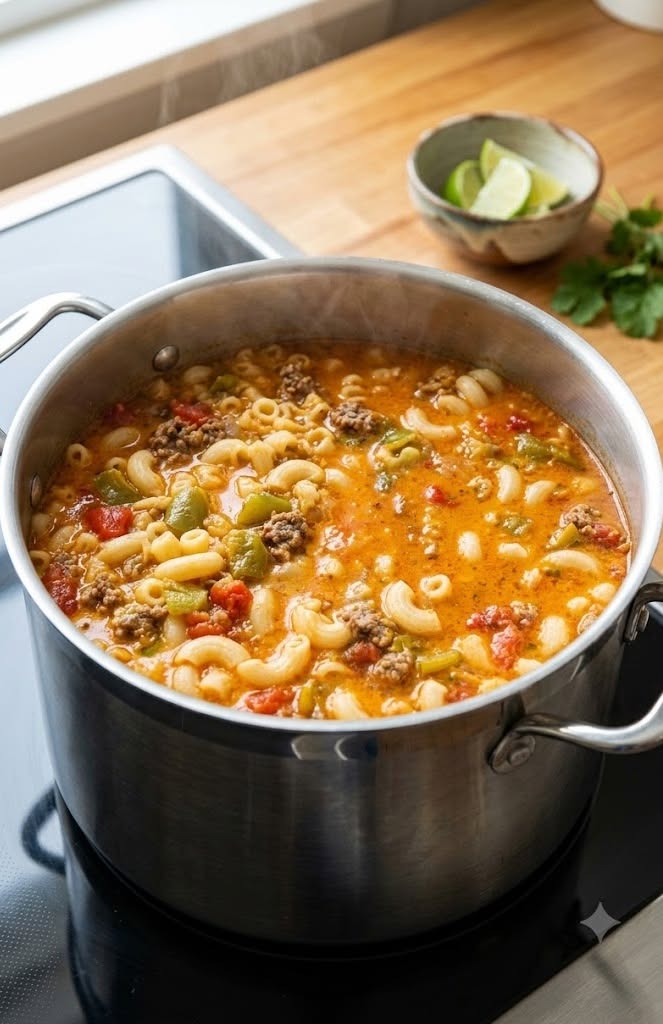
Why People Will Love Chile Verde Sopita Recipe Recipe
It’s comfort in a bowl. Warm broth, tender pasta, savory meat and melted cheese come together in a cozy, filling meal that feels like home.
Hatch green chile makes it special. Roasted Hatch chile adds a smoky, buttery, slowly building heat that makes this sopita taste distinctly New Mexican.
Toasting the pasta makes a big difference. It gives the macaroni a golden color, a nutty flavor and a firmer bite that holds up in the broth.
Two meats taste better than one. The spicy sausage adds seasoning and heat, and the ground beef adds a rich, meaty base. Together they make the broth deeply savory.
The cheese finish is creamy. Velveeta melts into a smooth, queso-like broth, and Muenster makes soft, stretchy pockets of cheese. Either way, it’s very satisfying.
It’s fast. The whole dish takes about 30 minutes, so it’s ideal for weeknights.
It all comes together in one pot, plus one small skillet for the pasta, so cleanup is easy.
Kids and adults both enjoy it. Kids love the cheesy macaroni, and adults love the chile kick. Adjust the chile to suit your family.
It’s budget-friendly. A pound of meat, a cup of pasta and pantry staples feed the whole family.
It brings together two traditions. It blends Mexican sopita with New Mexican green chile cooking, and the result is familiar and exciting at the same time.
Key Ingredients
Spicy sausage: It brings heat, fat and built-in seasoning. As it browns, it releases flavorful drippings that season the vegetables and broth. Bulk sausage crumbles most easily, but you can also remove links from their casings.
Ground beef: It balances the sausage with a rich, beefy flavor and hearty texture. Mixing the two keeps the dish from being too greasy or too spicy.
Roasted Hatch green chile: It’s the soul of the recipe. Hatch chiles are grown in New Mexico’s Hatch Valley and taste smoky, earthy and slightly sweet once roasted. You can use fresh-roasted, frozen or canned, and choose mild, medium or hot to control the heat.
Diced tomatoes: They add color, gentle acidity and a little sweetness, which balance the rich meat and cheese. Their juice adds flavor to the broth.
Onion and garlic: These aromatics add a savory backbone. The onion softens and sweetens, and the garlic adds warmth and depth.
Elbow macaroni: The small curved shape catches broth, meat and melted cheese in every bite. Toasting it first adds a nutty flavor and keeps it from turning mushy.
Butter and oil: Together they’re the perfect fat for toasting the pasta. Butter adds rich, nutty flavor, and oil raises the smoke point so the butter doesn’t burn.
Chicken stock: It turns the dish into a soup. As the macaroni cooks, the stock absorbs the flavors of the meat, chile and tomatoes and thickens slightly from the pasta’s starch. Low-sodium stock helps you control the salt.
Velveeta or Muenster cheese: This is the creamy finish. Velveeta melts completely for a smooth, velvety broth, like queso soup. Muenster is milder and buttery and melts into soft, stringy bites. Both melt well without turning grainy.
Salt and black pepper: Season carefully at the end. Sausage, stock and cheese all add salt.
Expert Tips
Brown the meat deeply. Spread it out in the pot and let it sit for a minute or two before stirring. Those browned bits on the bottom add a lot of flavor to the broth.
Keep a little fat in the pot. Drain most of the grease, but leave about a tablespoon to cook the vegetables. It carries the sausage flavor through the soup.
Toast the pasta while the vegetables cook. Running both pans at once saves time, so the macaroni is ready right when you need it.
Toast the pasta slowly and evenly. Use medium heat and stir often. Stop when most pieces are golden and smell nutty, after about 4–6 minutes. If it turns dark brown, it will taste bitter.
Taste the chile first. Hatch chile can vary widely in heat. Start with 1 cup, taste, and add more if you want.
Keep the simmer gentle. A hard boil breaks the pasta apart and makes the broth starchy and cloudy. Lazy bubbles are best.
Check the pasta early. Toasted pasta cooks slightly differently, so start tasting at 9–10 minutes. You want it tender but not mushy.
Cut the cheese into small, even cubes. Half-inch pieces melt quickly and evenly during the short resting time.
Melt the cheese off the heat. Turn the burner off or to its lowest setting before adding the cheese. Too much heat can make cheese separate and turn oily.
Keep extra stock nearby. The pasta keeps absorbing liquid as the sopita sits. A splash of warm stock loosens it right before serving.
Finish with something bright. A squeeze of lime, a little chopped cilantro or sliced green onions balances the richness and freshens the flavor.
Chile Verde Sopita Recipe
Ingredients
For the meat and vegetables
½ lb spicy sausage, casings removed if using links
½ lb ground beef
1–1½ cups roasted Hatch green chile, chopped (adjust to taste)
1 cup diced tomatoes, with their juice
½ cup onion, finely chopped
2 garlic cloves, minced
Salt and freshly ground black pepper, to taste
For the soup and pasta
1 tablespoon butter
1 tablespoon cooking oil
1 cup dry elbow macaroni
4 cups chicken stock
For the creamy finish
1 cup Velveeta or Muenster cheese, cut into small cubes
Instructions
1. Brown the meat
Set a large pot or Dutch oven over medium heat.
Add the sausage and ground beef and cook, breaking them into small crumbles, until browned and cooked through.
Pour off any extra grease.
2. Add the green chile and vegetables
Stir in the Hatch green chile, tomatoes, onion and garlic, and season with salt and pepper.
Cook for 3–4 minutes, stirring now and then, until the onion starts to soften and everything smells fragrant.
3. Toast the macaroni
While the vegetables cook, melt the butter with the oil in a separate skillet over medium heat.
Add the dry macaroni and stir often until it turns light golden and smells toasty and nutty.
Keep a close eye on it, as it can burn quickly.
4. Combine
Add the toasted macaroni to the pot with the meat and chile mixture, and stir gently to spread it evenly.
5. Simmer in the stock
Pour in the chicken stock and stir.
Bring it to a gentle boil, then lower the heat and simmer uncovered for 10–12 minutes, stirring occasionally, until the macaroni is tender and the broth has thickened slightly.
6. Melt in the cheese
Scatter the cheese cubes over the soup, cover the pot, and let it sit for 2–3 minutes to soften and melt.
Uncover and stir gently until the cheese is fully blended and the soup turns creamy.
7. Adjust and serve
Taste and add more salt, pepper or green chile if needed.
Serve hot, while the pasta is tender and the cheese is silky and smooth.
Important Notes When Making Chile Verde Sopita Recipe
Serve it right away. Sopita thickens a lot as it sits, because the pasta keeps soaking up broth. It’s at its best within 10 minutes of finishing.
Know your heat level. Spicy sausage plus hot Hatch chile can make a fiery soup. For kids or spice-sensitive eaters, use mild sausage and mild chile.
Watch the salt. Sausage, stock, tomatoes and especially Velveeta all contain sodium. Season only after the cheese is melted, and use low-sodium stock if you can.
Cook the meat thoroughly. Ground beef and sausage should reach 160°F (71°C).
Velveeta versus Muenster: Velveeta is a processed cheese product. It gives the smoothest, creamiest broth, but it’s higher in sodium. Muenster is a natural cheese with a milder flavor and a stretchier melt.
Check for allergens. The recipe contains gluten (macaroni) and dairy (butter, cheese). Some sausages contain gluten or soy, so check labels if needed.
Use a heavy pot. A Dutch oven browns meat evenly and keeps a steady simmer without scorching.
Handle chiles carefully. If you roast and peel fresh chiles, wear gloves and keep your hands away from your eyes.
Storage: Refrigerate leftovers in an airtight container for up to 3–4 days.
Freezing: It’s possible, but the pasta softens after thawing. For better results, freeze the meat and chile base without the pasta or cheese, then cook fresh macaroni when reheating.
Reheating: Warm gently on the stovetop with a generous splash of stock or water, stirring until creamy again. Add a few fresh cheese cubes to bring back the richness.
How to Enjoy Chile Verde Sopita Recipe After Cooking
Serve it at its best. Ladle the sopita into deep, warmed bowls as soon as the cheese has melted. That’s when the broth is silky, the pasta tender and the cheese gooey. Make sure each bowl gets plenty of meat, chile and macaroni.
Add toppings.
Chopped fresh cilantro for color and freshness
A squeeze of lime to brighten the rich broth
Sliced green onions or diced white onion for a little bite
A spoonful of sour cream or Mexican crema to soften the heat
Diced avocado for creamy richness
Extra roasted green chile for heat lovers
Crushed tortilla chips for crunch
Crumbled cotija or a little extra shredded cheese
Pick a side.
Warm flour tortillas, the traditional way to scoop and soak up the broth
Corn tortillas, warmed on a comal or dry skillet
Buttered bolillo rolls or crusty bread
Cornbread or green chile cornbread
Cheese quesadillas for an extra-cozy meal
A fresh green salad or cabbage slaw with lime dressing to balance the richness
Choose how to eat it.
Brothy: Eat it right away with a spoon, like a hearty soup.
Thick and creamy: Let it rest for 10–15 minutes so the pasta absorbs more broth and it becomes almost like a Southwestern mac and cheese.
Breakfast: Reheat leftovers and top with a fried egg and hot sauce.
Burrito filling: Spoon thick leftover sopita into a warm flour tortilla with extra cheese.
Choose a drink.
A cold Mexican lager or light beer with lime
Agua fresca, such as horchata, jamaica or cucumber-lime
Sweet iced tea or lemonade
Cold milk, the best way to cool chile heat, especially for kids
Enjoy the leftovers. Leftover sopita becomes thick and creamy in the fridge. Reheat it slowly on the stovetop with plenty of stock or water, stirring gently until it’s loose and soupy again. Finish with fresh cheese, lime and cilantro, and it’s just as comforting as the first bowl.
Nutrition Information (Estimated, Per Serving)
These estimates assume 4 servings, made with Velveeta, with the meat drained and no toppings.
Calories: 575 kcal | Total Fat: 35.4 g | Saturated Fat: 14.4 g | Monounsaturated Fat: 14.3 g | Polyunsaturated Fat: 3.3 g | Cholesterol: 109 mg | Sodium: 1,150–1,900 mg (depending on stock type and added salt) | Total Carbohydrates: 30.9 g | Dietary Fiber: 2.5 g | Sugars: 7.3 g | Protein: 29.5 g
Smart FAQs About This Recipe
What does “sopita” mean?
Sopita is Spanish for “little soup.” It usually refers to a simple Mexican soup of toasted pasta simmered in a tomato-based broth. Many families treat it as everyday comfort food, often the first soup children learn to love. This version adds meat, green chile and cheese for a heartier meal.
Is Chile Verde Sopita the same as chile verde?
No. Traditional chile verde is a slow-cooked stew of pork in a green chile or tomatillo sauce. This recipe borrows the green chile flavor but keeps the toasted-pasta base of sopita, so it’s quicker, cheesier and more like a pasta soup.
Can I use a different pasta?
Yes. Fideo, the thin noodle used in traditional sopa de fideo, is a classic choice. Small shells, ditalini, alphabet pasta and orzo also work well. Thinner pasta cooks faster, so check it after 6–8 minutes.
What can I use instead of Hatch green chile?
Roasted Anaheim peppers are the closest match. Roasted poblanos give a richer, earthier flavor. Canned diced green chiles work well when nothing else is available. For extra heat, add a roasted jalapeño or serrano.
Can I make it lighter?
Yes. Use lean ground beef or turkey, chicken or turkey sausage, and low-sodium stock. Use less cheese, or choose Muenster or reduced-fat cheese. You can also add vegetables like zucchini, spinach or corn to stretch each serving.
Why toast the macaroni in a separate pan?
A separate skillet lets the pasta toast evenly in butter and oil without being crowded by meat and vegetables. That direct contact with the hot fat creates the golden color and nutty flavor that define sopita. In the crowded pot, the pasta would steam instead of toast.
My sopita turned too thick. What should I do?
That’s normal, because the pasta keeps absorbing broth. Stir in warm chicken stock or water, ¼ cup at a time, until it’s as soupy as you like. Then taste and adjust the seasoning, since the extra liquid may dilute it.
Why did my cheese turn oily or clumpy?
The soup was probably too hot, or the cheese was added while it was boiling. Always turn the heat off or to its lowest setting first, use small cubes, and let them melt gently under the lid. Stir gently, not hard, once it’s melted.
Can I make it ahead of time?
For the best texture, make the meat and chile base ahead and refrigerate it for up to 3 days. When you’re ready to eat, reheat the base, toast fresh macaroni, add the stock and simmer, then melt in the cheese. A fully cooked sopita can be reheated too, but it will need extra liquid.
How do I know when the macaroni is done?
Taste a piece after about 10 minutes of simmering. It should be tender all the way through but still hold its shape. The broth should also look slightly thicker and glossier, because of the starch the pasta releases. If it’s still firm, simmer for another 1–2 minutes and check again.