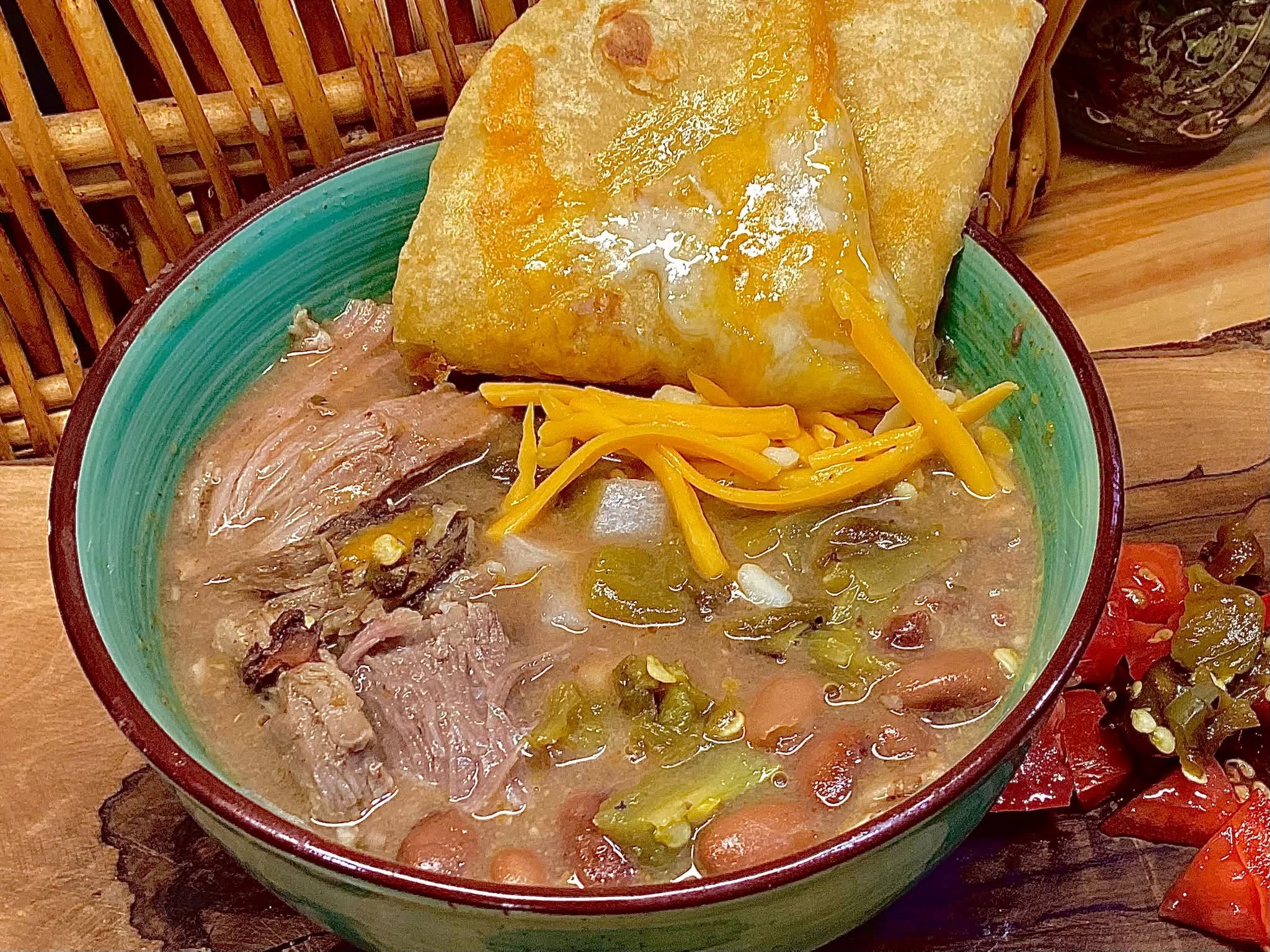
Pinto Beans with Pork and Hatch Green Chile
In New Mexico, a pot of pinto beans simmering on the stove is almost a household tradition. Pintos are the state’s official vegetable, alongside chile, and they’ve been a staple of Hispanic and Native kitchens in the Southwest for centuries.
This recipe takes that humble pot of frijoles and turns it into a full, soul-warming meal. Dried pinto beans cook slowly with smoky bacon and a whole piece of pork shoulder until the beans are creamy and the pork falls apart into tender shreds.
Mexican oregano, garlic and New Mexico green chile powder season the broth, and near the end, a generous amount of roasted Hatch green chile goes in, so its smoky, slightly sweet heat stays bright and noticeable. Rustic, patient cooking turns a few inexpensive ingredients into something deeply flavorful, the kind of dish that fills the house with an incredible aroma and brings everyone to the table.
Why People Will Love Pinto Beans with Pork and Hatch Green Chile Recipe
It’s real Southwestern comfort food. Creamy beans, tender pork and smoky green chile in a rich broth feel like a warm blanket on a cold day.
Layers of flavor build at every step. Bacon drippings, seared pork, browned onion, garlic, oregano and two forms of green chile each add something. The result tastes complex without being complicated.
The pork turns meltingly tender. Slow-simmered pork shoulder becomes so soft it shreds with a fork, and it flavors the beans as it cooks.
The Hatch chile stays vibrant. Adding most of it near the end keeps its fresh, roasted flavor bold instead of letting it fade.
Dried beans taste better than canned. Beans cooked from scratch are creamier and earthier, and they absorb every bit of flavor from the pork, bacon and broth.
It’s flexible. It works as a hearty soup, a stew, a side dish, or a filling for burritos and tacos. You can make the broth thinner or thicker to suit your taste.
One pot gives you two meals. You can set aside some of the shredded pork for tacos, enchiladas or breakfast burritos.
It’s affordable and feeds many. A pound of dried beans and a pound of pork make a big pot that easily feeds 6–8 people.
It’s packed with protein and fiber. Beans and pork together make a filling, nourishing meal that keeps you satisfied for hours.
The house smells amazing while it cooks. Hours of gentle simmering with bacon, chile and oregano make the whole kitchen smell wonderful.
It tastes even better the next day. Like most bean dishes, the flavors deepen overnight.
Key Ingredients
Dried pinto beans: They’re the foundation of the dish. Cooking from dried lets the beans absorb the pork, bacon and chile flavors as they soften, and they release starch that naturally thickens the broth. Fresh dried beans (less than a year old) cook faster and more evenly.
Pork shoulder (pork butt): This cut is well marbled with fat and connective tissue, which break down during the long simmer. The meat becomes tender and juicy and adds body and richness to the broth. Leaner cuts like loin would turn dry and stringy.
Bacon: It adds smoky, salty depth. The rendered drippings become the cooking fat for searing the pork and sautéing the onion, so that smoky flavor runs through the whole pot. The crispy bacon pieces go back in for extra texture.
Chicken broth: Cooking the beans in broth instead of water gives them a savory, rich flavor from the inside out. It also makes the bean liquid tasty enough to sip like soup.
Roasted Hatch green chile: This is the star of the dish. It’s grown in New Mexico’s Hatch Valley and roasted until charred, then peeled. It brings a smoky, buttery, slightly sweet heat. Adding it near the end keeps its flavor bright and distinct.
New Mexico green chile powder: Added early, it builds a steady green chile warmth into the broth during the long simmer. The chopped chile added at the end then gives fresh, roasted punch.
Mexican oregano: It’s not the same as Mediterranean oregano. Mexican oregano is more citrusy, earthy and slightly peppery, and it pairs especially well with beans and chile. Crushing it between your fingers releases its aromatic oils.
Yellow onion and garlic: They form the aromatic base. Cooking them in the drippings, while scraping up the browned bits, adds sweetness and savory depth.
Ground cumin (optional): A small amount adds a warm, earthy note that suits pinto beans. Use it sparingly so it doesn’t overpower the chile.
Kosher salt and black pepper: Salt seasons the beans throughout, and freshly ground pepper adds mild heat. Season lightly at first and adjust at the end, since the bacon and broth add salt as well.
Expert Tips
Check the age of your beans. Old beans (more than 1–2 years) may never get fully soft. Buy them from a store with high turnover, and look for a recent packing date.
Don’t skip sorting. Small stones and dirt clods are common in dried beans. Spread them on a baking sheet so they’re easy to look over.
Brine-soak for creamier beans. Add 1 tablespoon of salt per quart of soaking water. Contrary to the old myth, salted soaking water makes bean skins softer and the insides creamier.
Dry the pork before searing. Moisture prevents browning. Pat the pork dry and don’t move it until it releases easily from the pot, which means a good crust has formed.
Scrape up the fond. The browned bits stuck to the bottom after cooking the bacon and pork are packed with flavor. The moisture from the onion helps loosen them, so scrape well.
Keep the simmer gentle. A hard boil breaks the beans apart, makes the skins burst and can toughen the pork. Small, lazy bubbles are what you want.
Add hot liquid, not cold. Adding cold broth or water mid-cook interrupts the simmer and can make the beans cook unevenly. Keep a kettle or small pot of hot broth ready.
Hold back acid until the beans are soft. Acidic ingredients like tomatoes or lime can keep beans from softening. Add them only after the beans are fully tender.
Check doneness by tasting several beans. A few soft beans don’t mean the whole pot is done. Taste 4–5 from different spots, and they should all be creamy all the way through.
Mash some beans for body. Mashing ½ cup of beans thickens the broth naturally with their starch, with no flour or cornstarch needed.
Save some chile for the end. Stir a final handful of roasted Hatch chile into each bowl or onto the top just before serving for a burst of fresh flavor.
Use a pressure cooker to save time. After searing in sauté mode, cook soaked beans and pork on high pressure for about 35–40 minutes with a natural release, then add the chile and simmer.
Pinto Beans with Pork and Hatch Green Chile
Ingredients
For the beans and pork
1 lb (about 2 cups) dried pinto beans
1 lb boneless pork shoulder (pork butt), whole or cut into 2–3 large pieces
4 bacon slices, chopped
1 tablespoon bacon drippings (saved from cooking the bacon), plus extra if you like
6–7 cups chicken broth, plus more broth or water as needed
1 small yellow onion, diced
3 garlic cloves, minced
1 teaspoon Mexican oregano, crumbled between your fingers
1–2 teaspoons New Mexico green chile powder, to taste
½ teaspoon ground cumin (optional)
1 teaspoon kosher salt to start, plus more to taste
½ teaspoon freshly ground black pepper
1½–2 cups roasted Hatch green chile, peeled and coarsely chopped
½ cup extra chopped roasted Hatch green chile, for serving (optional)
Optional toppings and sides
Shredded cheddar or Monterey Jack
Chopped white onion
Fresh cilantro
Warm flour tortillas
Corn tortillas
Lime wedges
Salsa or extra roasted Hatch chile
Instructions
1. Soak the beans
Pick through the beans and discard any small stones or broken, shriveled beans.
Rinse them well under cool running water.
Put the beans in a large bowl and cover them with several inches of water.
Soak overnight, then drain and rinse.
Quick-soak method: Put the beans in a pot, cover with water, and boil for 2 minutes. Turn off the heat, cover, and let them sit for 1 hour, then drain.
2. Crisp the bacon
Put the chopped bacon in a large Dutch oven or heavy pot.
Cook over medium heat until browned and crispy.
Lift the bacon out with a slotted spoon and set it aside.
Leave about 1 tablespoon of drippings in the pot.
3. Sear the pork
Pat the pork dry with paper towels and season it lightly with salt and pepper.
Place it in the hot bacon drippings.
Sear for 2–3 minutes per side, until nicely browned on the outside.
It doesn’t need to be cooked through yet.
Move it to a plate for now.
4. Sauté the onion and garlic
Add the onion to the same pot.
Cook for 4–5 minutes, scraping up the browned bits of pork and bacon from the bottom.
Stir in the garlic and cook for 30–60 seconds, just until fragrant.
5. Combine the beans and seasonings
Put the pork back in the pot.
Add the soaked beans and the cooked bacon.
Season with the Mexican oregano, green chile powder, cumin (if using), salt and pepper.
Pour in enough chicken broth to cover everything by 1–2 inches.
6. Simmer low and slow
Bring the pot to a gentle boil.
Reduce the heat to low, set the lid slightly ajar, and simmer gently for about 1½–2½ hours.
Stir now and then and keep an eye on the liquid.
Whenever the beans start to peek above the surface, add more hot broth or water.
The cooking time depends on how old the beans are and how big the pork pieces are.
7. Shred the pork
When the pork is fork-tender and falls apart easily, carefully lift it out of the pot.
Let it cool for a few minutes.
Shred it with two forks, discarding any large pieces of fat.
Return all the pork to the beans, or save some for tacos, burritos, enchiladas or breakfast.
8. Stir in the green chile
Once the beans are fully tender, add the chopped roasted Hatch green chile.
Return as much shredded pork as you like to the pot.
Simmer gently for 10–15 minutes more. This gives the chile time to flavor the broth while keeping its fresh, roasted taste.
9. Adjust the texture
For brothier beans, add a splash more chicken broth.
For thicker, creamier beans, mash about ½ cup of beans against the side of the pot and stir them back in.
Taste and adjust with more salt, pepper, oregano or green chile powder if needed.
10. Rest and serve
Turn off the heat and let the beans rest for 10–15 minutes. The broth will thicken a little as it sits.
Ladle into deep bowls, making sure each one gets plenty of pork and green chile.
Top with cheese, onion, cilantro or extra roasted chile, if you like.
Serve with warm flour tortillas for soaking up the smoky broth.
What the Finished Dish Should Look and Taste Like
The beans should be soft and creamy but still mostly whole, sitting in a rich, lightly thickened broth.
The pork should be tender enough to pull apart with a fork. You should taste smoky bacon, tender pork, earthy beans, roasted Hatch chile and Mexican oregano, with a gentle green chile warmth.
The Hatch chile should still stand out rather than fading into the beans, which is why most of it goes in near the end.
Important Notes When Making Pinto Beans with Pork and Hatch Green Chile
Cooking time varies a lot. It depends on the age of the beans, your altitude, the hardness of your water and the size of the pork. Plan for anywhere from 1½ to 2½ hours or more, and start early.
Altitude matters. At high elevations, including much of New Mexico, water boils at a lower temperature, so beans take noticeably longer to cook. Add extra time and liquid.
Keep the beans covered with liquid. Beans that sit above the liquid cook unevenly and can turn tough or dry. Check every 20–30 minutes.
Season carefully. Bacon, broth and chile powder all add salt. Using low-sodium broth gives you better control. Do your final seasoning at the end, when the flavors have concentrated.
Cook the pork to the right temperature. For shreddable pork, it should reach about 195–205°F (90–96°C) inside. At that point the connective tissue has broken down.
Wear gloves with roasted chiles. Capsaicin oils can irritate your skin and eyes, especially when peeling and chopping.
The heat level depends on your chile. Hatch chile ranges from mild to extra hot, and the chile powder adds heat too. Taste as you go, especially if you’re serving kids or people sensitive to spice.
Beans can cause digestive discomfort. Soaking and rinsing reduces the compounds that cause gas, and cumin and Mexican oregano are traditionally believed to help with digestion.
The recipe is naturally gluten-free, as long as your broth, chile powder and bacon don’t contain gluten. Check the labels.
Storage: Cool the beans, then refrigerate them in airtight containers for up to 4–5 days. They also freeze very well for up to 3 months, broth and all.
Reheating: The beans thicken a lot in the fridge. Reheat gently on the stovetop with a splash of broth or water, stirring occasionally.
How to Enjoy Pinto Beans with Pork and Hatch Green Chile After Cooking
Let it rest first. Give the pot 10–15 minutes off the heat before serving. The broth thickens slightly, the flavors settle, and the beans become even creamier.
Serve it in style. Ladle the beans into deep, warmed bowls, making sure each one gets plenty of shredded pork, chunks of green chile and enough broth. Set out the toppings so everyone can build their own bowl.
Add toppings.
Shredded cheddar or Monterey Jack, melting into the hot broth
Finely chopped white onion for a sharp, fresh crunch
Chopped fresh cilantro
A squeeze of lime to brighten the rich flavors
Extra roasted Hatch green chile for more heat and smoke
Salsa, either fresh pico de gallo or a red chile salsa
A spoonful of sour cream or Mexican crema
Sliced avocado or radishes for freshness and color
Pick a side.
Warm flour tortillas, the classic New Mexican way to scoop and soak up the broth
Corn tortillas, warmed on a comal or dry skillet
Cornbread, buttered and still warm, a perfect match for beans and chile
Mexican or Spanish rice, to stretch the meal and catch the broth
Sopapillas with honey, a New Mexico favorite
A simple green salad or cabbage slaw with lime dressing to balance the richness
Try other ways to eat it.
As a soup: Keep it brothy and eat it with a spoon, like a hearty bean soup.
As a stew: Mash more beans for a thick, spoonable stew.
Burritos: Roll beans, pork, cheese and green chile into a large flour tortilla, then smother it with more chile.
Tacos: Use the reserved shredded pork, drained beans and chile in warm corn tortillas.
Breakfast: Serve the beans with fried eggs, warm tortillas and a little cheese, or make breakfast burritos with scrambled eggs.
Tostadas or nachos: Drain the beans slightly and pile them onto crispy tostadas or chips with cheese and toppings.
Refried style: Mash leftover beans in a hot skillet with a little bacon grease for rich, homemade refried beans.
Choose a drink.
A cold Mexican lager or amber beer with lime
Sweet iced tea or lemonade
Agua fresca, such as horchata, jamaica or cucumber-lime
Cold milk to cool the chile heat
Hot coffee, for breakfast-style bowls
Enjoy the leftovers. This dish is often better the next day, once the flavors have fully blended. Reheat gently with a splash of broth, and use the leftovers for burritos, refried beans or a quick lunch.
Nutrition Information (Estimated, Per Serving)
These estimates assume 8 servings, with the visible pork fat discarded and all of the pork returned to the pot.
Calories: 355 kcal | Total Fat: 10.4 g | Saturated Fat: 3.5 g | Monounsaturated Fat: 4.4 g | Polyunsaturated Fat: 1.3 g | Cholesterol: 43 mg | Sodium: 500–1,100 mg (depending on broth type and added salt) | Total Carbohydrates: 39.4 g | Dietary Fiber: 9.4 g | Sugars: 2.8 g | Protein: 25.4 g
Smart FAQs About This Recipe
Why are pinto beans so important in New Mexican cooking?
Pinto beans have been grown in the Southwest for centuries and are a staple of Hispanic and Native American cooking there. They’re so important that pinto beans and chile are New Mexico’s official state vegetables. A pot of beans on the stove is a classic part of everyday New Mexican home cooking.
Can I use canned pinto beans instead of dried?
Yes, but the flavor and texture won’t be quite as rich. Use about 4–5 cans (15 oz each), drained and rinsed. Simmer the pork in broth first for about 2 hours, until tender, then add the canned beans for the last 30 minutes so they absorb flavor without turning mushy.
Is this dish very spicy?
It’s usually mild to medium. The heat comes from the Hatch chile and the green chile powder. Use mild Hatch chile and less chile powder for a gentle warmth, or use hot or extra-hot Hatch chile for a fiery pot.
What other meats can I use instead of pork shoulder?
A smoked ham hock is a traditional choice that adds deep smoky flavor. Shred the meat from the bone at the end. Chorizo, beef chuck or smoked sausage also work well. For lighter beans, use chicken thighs, but add them later, since they cook much faster.
Is this dish healthy?
It’s quite nourishing. Pinto beans are rich in fiber, plant protein, folate, iron and potassium, and pork adds high-quality protein. For a lighter version, use less bacon, trim the pork well, skim the fat from the broth and use low-sodium broth.
Do I really need to soak the beans?
Soaking isn’t strictly required, but it’s recommended. Soaked beans cook faster and more evenly, have fewer burst skins and may be easier to digest. Unsoaked beans work too, but expect them to take 1–2 hours longer and need more liquid.
My beans have been cooking for hours and are still hard. What’s wrong?
The most common causes are old beans, hard water, high altitude, or adding acid or too much salt too early. Keep simmering and add hot liquid as needed. A pinch of baking soda (about ⅛ teaspoon) can help soften them in hard water. Next time, use fresher beans.
Can I make this in a slow cooker?
Yes. Crisp the bacon and sear the pork on the stovetop first for the best flavor. Then put everything except the roasted green chile in the slow cooker, and cook on low for 8–10 hours or on high for 5–6 hours. Shred the pork, stir in the green chile, and cook for 20–30 minutes more.
Why add the roasted Hatch chile near the end instead of at the beginning?
After hours of simmering, roasted chile loses its fresh, smoky character and fades into the background. Adding the chile powder early builds a steady base of warmth, and adding the roasted chile at the end keeps its flavor bright and noticeable in every bite.
How do I know when the pork is ready to shred?
The pork is ready when a fork slides in easily and the meat pulls apart with very little effort, usually around the same time the beans are tender. If it’s still firm or resists shredding, return it to the pot and simmer for another 20–30 minutes. Its connective tissue needs more time to break down.