Frijoles Charros (Mexican Charro Beans)
Frijoles Charros, or “cowboy beans,” are a beloved dish from northern Mexico, especially the ranching regions of Nuevo León, Coahuila, and Chihuahua. Their name comes from the charros, the skilled Mexican horsemen and ranchers known for their elaborate outfits and deep traditions.
These hearty beans were the kind of meal that could simmer over an open fire and feed a hungry crew after a long day of work. Today, frijoles charros are a staple at carne asada cookouts, family gatherings, and taquerías on both sides of the border.
This recipe stays true to that rustic, smoky spirit. Pinto beans are brined overnight for a creamy, evenly seasoned texture, then simmered in chicken broth with bay leaves and traditional epazote. Meanwhile, thick-cut bacon is browned until its fat renders, then joined by onion, serrano chiles, and garlic. Fire-roasted tomatoes go into the skillet next, building a smoky, savory base that’s stirred into the beans. As everything simmers together, the broth thickens into a rich, flavorful caldo that’s part soup, part stew. Finished with fresh cilantro, these beans are comforting, deeply savory, and full of smoky warmth, perfect as a side or a satisfying meal on their own.
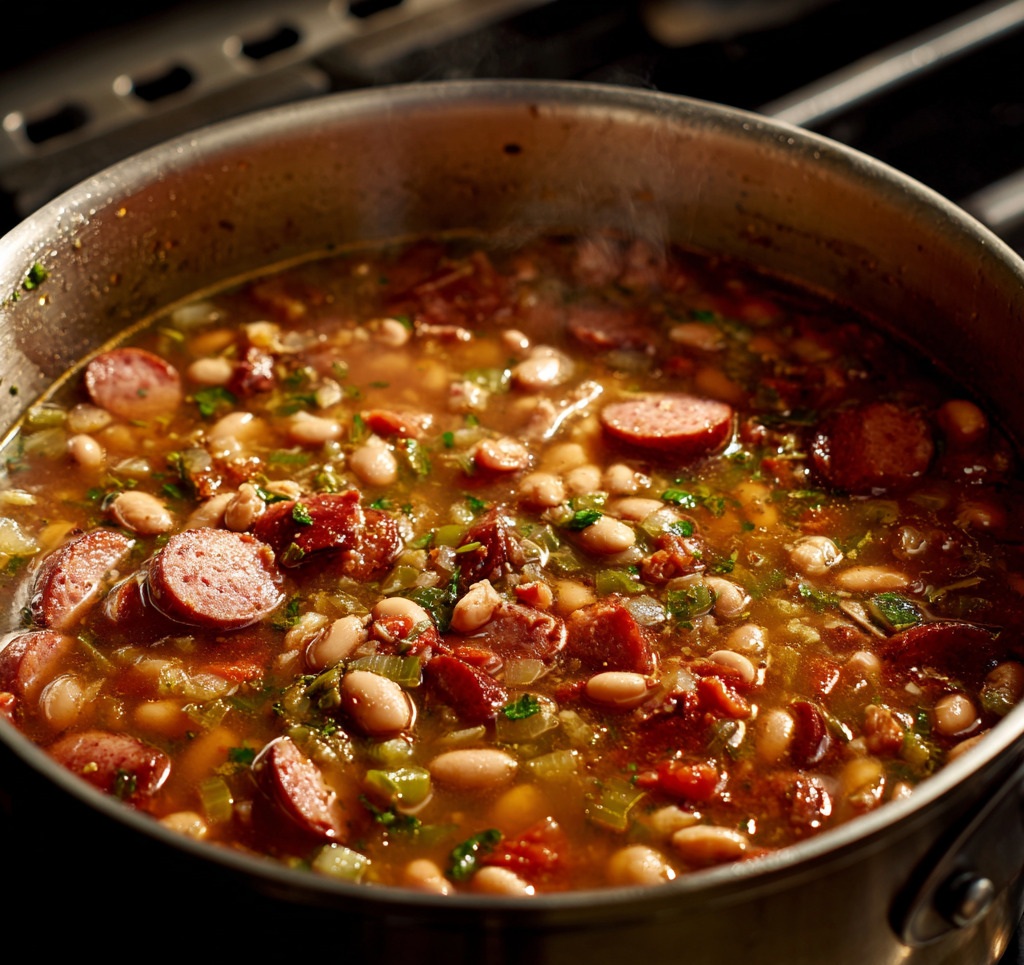
Why People Will Love Frijoles Charros (Mexican Charro Beans) Recipe
A classic northern Mexican favorite: Frijoles charros are a traditional dish full of ranch-style heritage.
Smoky, savory flavor: Thick-cut bacon and fire-roasted tomatoes create a rich, smoky depth.
Creamy, tender beans: Brining the beans overnight makes them creamy, evenly seasoned, and less likely to split.
Rich, flavorful broth: The beans simmer into a savory, soupy broth that’s perfect for dipping and sipping.
Gentle heat: Serrano or jalapeño chiles add warmth that can be easily adjusted.
Fresh, bright finish: Cilantro adds a fresh, herbal lift to the rich, hearty beans.
Authentic touch with epazote: This traditional Mexican herb adds a distinctive flavor.
Hearty and satisfying: Packed with protein and fiber, it can be a side dish or a meal.
Perfect for cookouts: It’s the classic companion to carne asada, grilled meats, and tacos.
Feeds a crowd: A big pot is ideal for parties, gatherings, and family meals.
Even better the next day: The flavors deepen as the beans rest overnight.
Budget-friendly: Dried beans make a large, filling dish at a low cost.
Easy to customize: Add chorizo, ham, sausage, or hot dogs for extra heartiness.
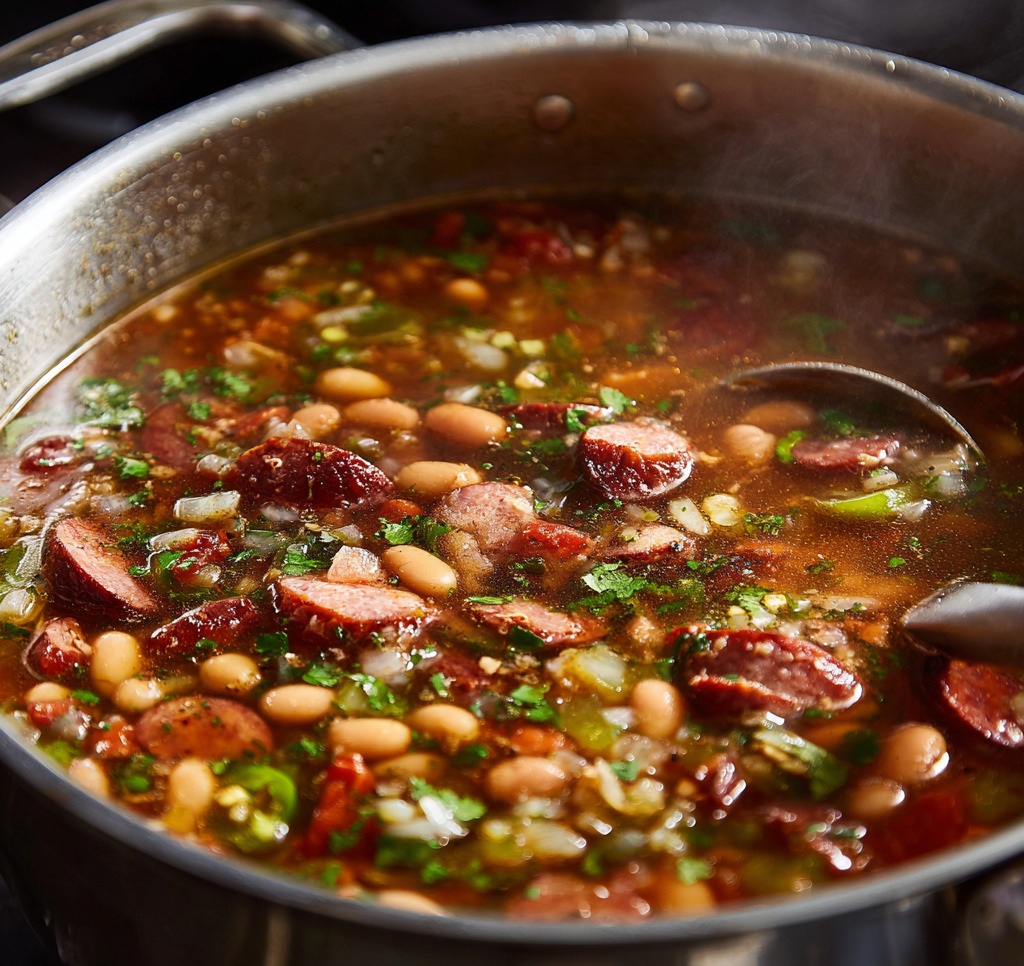
Key Ingredients
Dried pinto beans: The heart of the dish. Pinto beans become creamy and tender when slow-cooked, with an earthy flavor that soaks up the smoky, savory broth.
Kosher salt (for soaking): Brining the beans seasons them from the inside, softens their skins, and helps them cook evenly without bursting.
Low-sodium chicken broth: Adds savory depth and body to the beans while keeping the sodium in check.
Bay leaves: Lend a gentle herbal note that rounds out the flavor of the broth.
Epazote: A traditional Mexican herb with a bold, slightly minty, earthy flavor. It’s commonly cooked with beans and is believed to make them easier to digest.
Thick-cut bacon: Provides smoky, salty richness. Its rendered fat becomes the flavorful base for cooking the aromatics.
Onion: Sautéed in bacon fat, it adds sweetness and savory depth.
Serrano chiles or jalapeño: Add fresh, bright heat. Serranos are hotter, while jalapeños are milder.
Garlic: Brings warm, aromatic flavor to the base.
Fire-roasted diced tomatoes: They add smoky sweetness, gentle acidity, and color, helping to build the rich, flavorful broth.
Fresh cilantro: Adds a fresh, herbal finish that brightens the hearty beans.
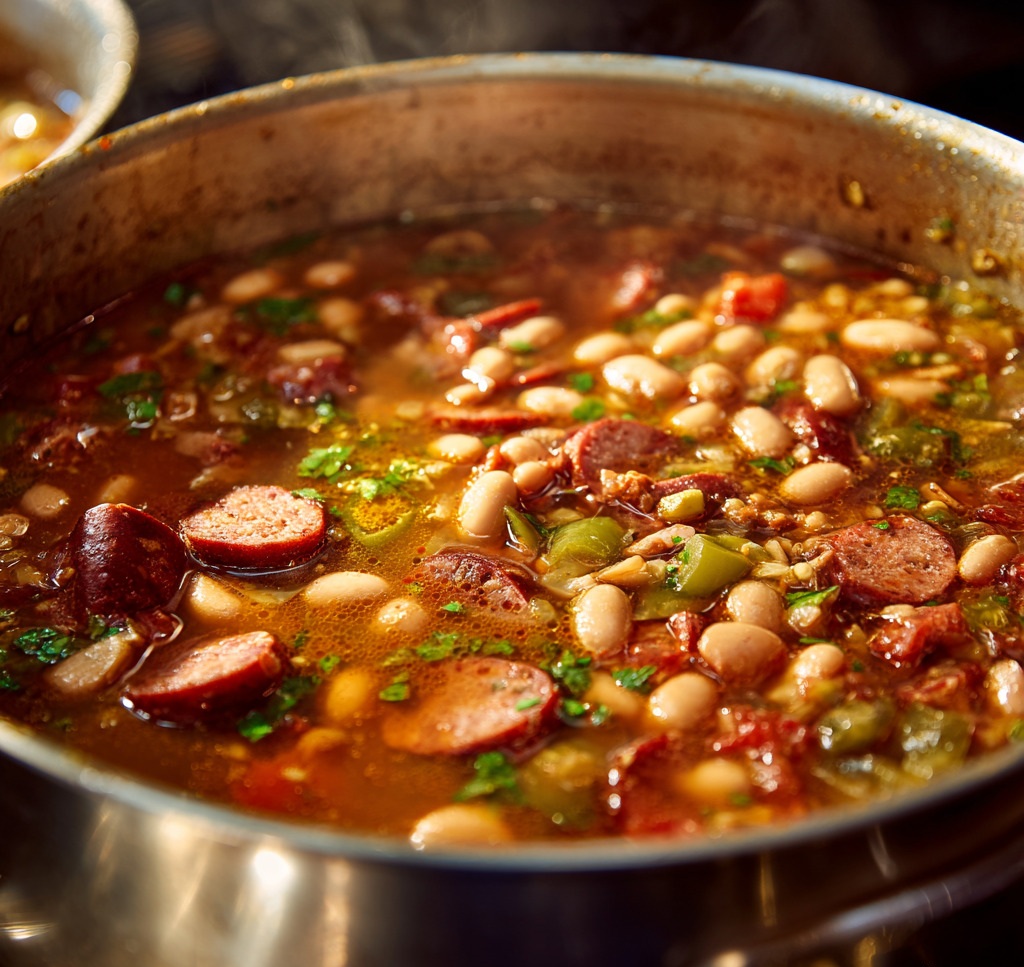
Expert Tips
Sort and rinse the beans: Remove any stones, debris, or broken beans before soaking.
Brine the beans: Soaking beans in salted water gives them creamier interiors and more tender skins.
Use fresh beans: Beans older than a year may take much longer to cook or never fully soften.
Simmer gently: Keep the beans at a low simmer. Boiling hard can split their skins and make them mushy.
Check the beans early: Cooking time varies by bean age. Start checking at 35–40 minutes.
Don’t add tomatoes too early: Acidic ingredients can slow down softening, so add the tomato mixture once the beans are tender.
Cook the bacon slowly: Medium heat allows the fat to render fully without burning the bacon.
Drain excess fat if needed: If your bacon releases a lot of fat, spoon off some before adding the onions.
Scrape up the browned bits: The fond in the skillet adds deep, savory flavor to the beans.
Mash some beans: For a thicker, creamier broth, mash a cup of beans against the side of the pot.
Add more meats: For a heartier, more traditional version, add sliced chorizo, ham, sausage, or hot dogs.
Use dried epazote if needed: If fresh epazote isn’t available, use 1–2 teaspoons dried.
Taste before seasoning: Bacon, broth, and brined beans all add salt. Taste before adding more.
Let them rest: Allowing the beans to sit for 15–20 minutes before serving helps the broth thicken and the flavors meld.
Frijoles Charros (Mexican Charro Beans)
Ingredients
Dried pinto beans: 1 pound (450 g)
Kosher salt: 2 tablespoons for soaking, plus 2 teaspoons for cooking and more to taste
Low-sodium chicken broth: 6 cups (1.4 liters), homemade or store-bought
Bay leaves: 2
Fresh epazote: 2 sprigs (optional, for a traditional touch)
Thick-cut bacon: 12 oz (340 g), chopped
White or yellow onion: 1 medium (about 8 oz / 225 g), finely chopped
Serrano chiles or jalapeño: 2 serranos or 1 jalapeño, minced (remove the seeds for less heat)
Garlic: 3 cloves (about 1 tablespoon / 12 g), minced
Fire-roasted diced tomatoes: 2 cans (14 oz / 400 g each)
Fresh cilantro: 1 large handful, chopped (leaves and tender stems)
Instructions
Step 1: Soak the beans.
Put the dried beans in a large bowl and cover them with cold water by at least 4 inches.
Stir in 2 tablespoons of kosher salt until it dissolves.
Let the beans soak at room temperature for 8–12 hours, then drain and rinse them well.
Step 2: Simmer the beans.
Move the soaked beans to a Dutch oven and add the chicken broth, bay leaves, 2 teaspoons of salt, and the epazote if using.
Bring to a boil over high heat, then lower the heat to a gentle simmer.
Cover and cook for about 45 minutes, until the beans are just tender.
Step 3: Cook the bacon and aromatics.
Meanwhile, heat a large skillet over medium-high heat.
Add the bacon and cook, stirring often, for about 5 minutes, until the fat melts out and the edges begin to brown.
Add the onion and chiles and cook for about 4 minutes, until soft and lightly golden.
Stir in the garlic and cook for 30 seconds more, just until fragrant.
Step 4: Add the tomatoes.
Pour the fire-roasted tomatoes into the skillet, scraping up the browned bits from the bottom.
Cook for about 3 minutes, until the liquid reduces slightly and the mixture starts to sizzle.
Step 5: Combine and simmer.
Uncover the beans and stir in the bacon and tomato mixture.
Let everything cook uncovered for another 20 minutes, stirring now and then, until the broth thickens and turns rich and creamy.
Step 6: Finish and serve.
Taste and add more salt if needed.
Remove the bay leaves, stir in the chopped cilantro, and serve hot.
These beans taste even better the next day and keep in the refrigerator for up to 1 week.
Important Notes When Making Frijoles Charros (Mexican Charro Beans)
Soaking is important: Brining overnight gives the best texture. If you’re short on time, use the quick-soak method: boil the beans for 2 minutes, cover, and let them sit for 1 hour.
Cooking time varies: Older beans may take longer to become tender. Add more broth or water as needed.
Keep the beans covered with liquid: Add hot water or broth if the level drops too low during cooking.
Heat level varies: Serranos are hotter than jalapeños. Remove the seeds and membranes for a milder pot.
Watch the salt: Brined beans, bacon, broth, and canned tomatoes all add salt. Season carefully at the end.
Epazote is optional: It adds traditional flavor, but the beans are still delicious without it.
Remove bay leaves before serving: Bay leaves are inedible and should be discarded.
Storage: Refrigerate leftovers in airtight containers for up to 1 week.
Freezing: Charro beans freeze well for up to 3 months. Thaw overnight in the fridge before reheating.
Dietary notes: This recipe is naturally gluten-free and dairy-free. Check broth labels to confirm they’re gluten-free.
How to Enjoy Frijoles Charros (Mexican Charro Beans) After Cooking
Serve them hot in bowls. Ladle the beans and plenty of their savory broth into bowls. Frijoles charros are meant to be soupy, so be sure to include lots of the flavorful liquid.
Add fresh toppings.
Chopped fresh cilantro
Diced white onion
Sliced fresh jalapeños or serranos
A squeeze of lime
Crumbled queso fresco or cotija
Diced avocado
Pico de gallo
Sliced radishes
Pair with classic mains.
Carne asada: The most traditional pairing for frijoles charros.
Grilled chicken or pork: Smoky meats complement the beans perfectly.
Tacos: Serve alongside tacos al pastor, carnitas, or barbacoa.
Fajitas: A hearty, flavorful side for sizzling fajitas.
Barbecue: Brisket, ribs, or pulled pork.
Enchiladas or tamales: A comforting combination.
Serve with breads and sides.
Warm corn or flour tortillas: Perfect for dipping into the broth.
Mexican rice: A classic side that soaks up the savory liquid.
Cornbread: Its sweetness balances the smoky beans.
Grilled green onions (cebollitas): A traditional carne asada side.
Guacamole and chips: Great for gatherings.
Enjoy them as a meal. Serve a big bowl of charro beans with warm tortillas and toppings for a simple, filling, and comforting meal.
Make it a cookout tradition. Serve frijoles charros at backyard barbecues, carne asada parties, and family gatherings. Keep them warm in a slow cooker so guests can help themselves.
Pair with drinks. Mexican lager, michelada, agua fresca, horchata, iced tea, or sparkling water with lime all complement the smoky, savory flavors.
Store and reheat leftovers.
Refrigerate: Cool completely and store in airtight containers for up to 1 week.
Stovetop: Reheat over medium heat, adding a splash of broth or water if the beans have thickened.
Microwave: Heat individual portions in 1–2 minute intervals, stirring between each.
Freeze: Portion into freezer-safe containers for up to 3 months.
Repurpose leftovers.
Refried beans: Mash the beans in a skillet until thick and creamy.
Burritos: Wrap them in tortillas with rice, cheese, and salsa.
Nachos: Spoon over tortilla chips with melted cheese.
Breakfast tacos: Pair with scrambled eggs and cheese.
Bean soup: Add extra broth and vegetables for a hearty soup.
Nutrition Information
Estimated per serving, based on 8 servings (about 1 cup each), made with 12 oz of thick-cut bacon with all rendered fat kept in the pot, low-sodium chicken broth, and canned fire-roasted tomatoes.
Calories: 438 kcal | Total Fat: 20.3 g | Saturated Fat: 6.5 g | Monounsaturated Fat: 8.8 g | Polyunsaturated Fat: 2.4 g | Cholesterol: 29 mg | Sodium: 950–1,100 mg (depending on bacon, canned tomatoes, and added salt) | Total Carbohydrates: 43.6 g | Dietary Fiber: 10.4 g | Sugars: 5 g | Protein: 20 g
Note: Pouring off about half of the rendered bacon fat before adding the onions lowers each serving by roughly 65 calories and 7 g of fat. Using no-salt-added tomatoes and skipping the extra cooking salt can reduce sodium to about 500–600 mg per serving.
Smart FAQs About This Recipe
What are frijoles charros?
Frijoles charros, or “cowboy beans,” are a traditional northern Mexican dish of pinto beans simmered in a savory broth with bacon, onions, chiles, garlic, and tomatoes. They’re often served at carne asadas and family gatherings.
What’s the difference between frijoles charros and frijoles borrachos?
They’re very similar. Frijoles borrachos (“drunken beans”) include beer in the broth, which adds a subtle malty flavor. Frijoles charros are usually made without beer.
Are charro beans spicy?
They’re mildly spicy. The serranos or jalapeño add gentle heat. Remove the seeds for milder beans, or add more chiles for extra spice.
What is epazote, and do I need it?
Epazote is a Mexican herb with a strong, earthy, slightly minty flavor. It’s traditionally cooked with beans and may help reduce bloating. It’s optional, and the beans are still delicious without it.
Can I make frijoles charros vegetarian?
Yes. Skip the bacon and use vegetable broth. Sauté the onions and chiles in olive oil, and add smoked paprika or chipotle in adobo for smoky flavor.
Can I use canned pinto beans?
Yes. Use three or four 15-oz cans, drained and rinsed. Skip the soaking and long simmer, combine the beans with about 3 cups of broth, and simmer with the bacon-tomato mixture for 20–25 minutes.
Why do you soak the beans in salted water?
Brining helps the beans cook more evenly, gives them a creamier texture, softens the skins, and seasons them all the way through.
Can I make them in a slow cooker or Instant Pot?
Yes. In a slow cooker, add the soaked beans, broth, bay leaves, and epazote and cook on low for 6–8 hours, then stir in the bacon-tomato mixture for the final hour. In an Instant Pot, pressure cook soaked beans with the broth for 10–12 minutes with a natural release, then add the bacon mixture and simmer on sauté mode for 10–15 minutes.
Why are my beans still hard?
Old beans, hard water, or adding acidic ingredients too early can keep beans firm. Keep simmering, add hot liquid as needed, and wait to add tomatoes until the beans are tender.
How do I make the broth thicker?
Simmer the beans uncovered for longer, or mash about a cup of beans and stir them back into the pot. The broth also thickens naturally as the beans cool.