Italian Penicillin Soup
Italian Penicillin Soup, or pastina in brodo, is the soup that generations of Italian children have been raised on. In Italy, pastina, meaning “little pasta,” is often one of the very first solid foods a child eats, and a warm bowl of pastina simmered in broth is the remedy every nonna turns to when someone is sick, tired, or simply in need of comfort.
Its gentle, soothing nature earned it the affectionate nickname “Italian penicillin,” a nod to its reputation as a cure-all for colds, sore throats, and bad days alike. Recently, this humble dish has found a whole new audience as a viral comfort food, but for Italian families, it has always been a cherished tradition.
This version keeps the soup beautifully simple, letting a few quality ingredients shine. Rich broth is brought to a boil, then sweet cherry tomatoes, blanched and peeled, are stirred in to add a delicate, fresh brightness. Tiny pastina cooks right in the broth, releasing a bit of starch that gives the soup a silky, comforting body. Off the heat, freshly grated Parmesan and a drizzle of olive oil add richness, and a crack of black pepper finishes it off. The result is a light, soothing, deeply nourishing bowl that’s ready in about 15 minutes and tastes like a warm hug from an Italian grandmother.
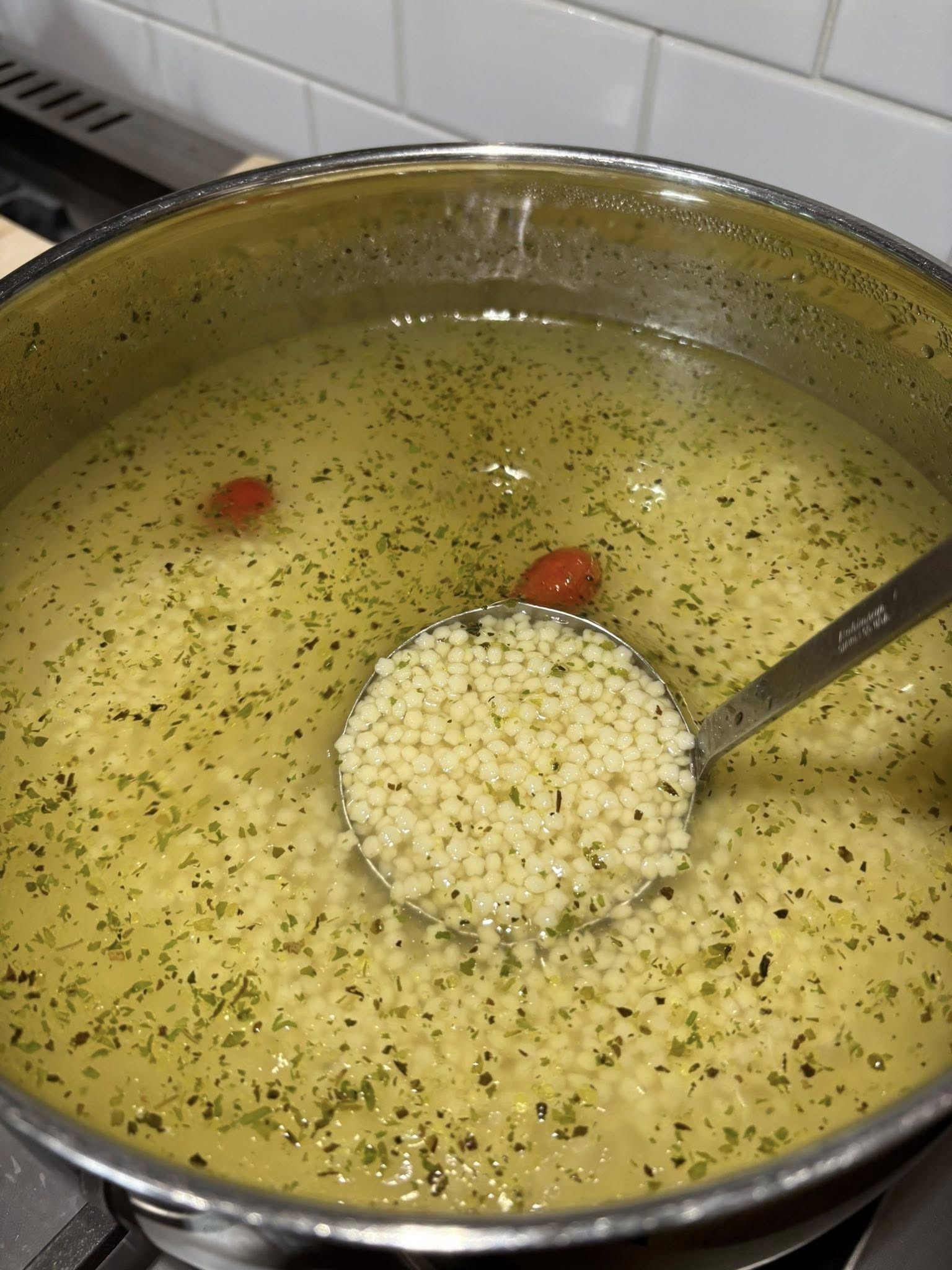
Why People Will Love Italian Penicillin Soup Recipe
The ultimate comfort food: It’s the soup Italian families turn to when someone needs comfort or care.
Soothing and gentle: Light, warm, and easy to eat, perfect for sick days.
Quick and easy: Ready in about 15 minutes with minimal effort.
Just a few ingredients: Pastina, broth, tomatoes, Parmesan, and olive oil.
Silky, cozy texture: Tiny pasta cooks right in the broth for a comforting consistency.
Fresh tomato brightness: Peeled cherry tomatoes add a delicate, sweet flavor.
Nutty Parmesan finish: Freshly grated cheese adds richness and savory depth.
Kid-friendly: Mild, simple flavors that children love.
Budget-friendly: Inexpensive pantry staples make a satisfying meal.
Vegetarian option: Easily made with vegetable broth.
Versatile: Add an egg, vegetables, or chicken to make it heartier.
A cherished tradition: It carries the warmth and nostalgia of Italian family kitchens.
Key Ingredients
Pastina: Tiny pasta shapes such as stelline (little stars), acini di pepe, or orzo. They cook quickly and give the soup its signature cozy texture.
Broth: The foundation of the soup. Homemade chicken broth gives the richest, most comforting flavor, while store-bought or vegetable broth works well too.
Cherry tomatoes: Sweet and juicy, they add a subtle freshness and gentle acidity. Peeling them ensures a smooth, delicate texture.
Parmesan cheese: Freshly grated Parmigiano-Reggiano adds nutty, salty, umami richness and slightly thickens the broth.
Extra-virgin olive oil: A drizzle at the end adds fruity richness and a silky finish.
Salt and black pepper: Simple seasonings that bring out the flavors.
Expert Tips
Use quality broth: Since the soup has so few ingredients, the broth makes all the difference. Homemade broth is best.
Simmer a Parmesan rind: Add a Parmesan rind to the broth while it heats for extra savory depth. Remove it before serving.
Score the tomatoes: The small X makes peeling quick and easy after blanching.
Blanch briefly: Soak the tomatoes just until the skins loosen, about 2–3 minutes.
Chop the tomatoes small: Small pieces blend into the soup more evenly.
Stir the pastina: Tiny pasta can clump or stick to the bottom. Stir occasionally while it cooks.
Don’t overcook: Pastina cooks quickly. Check it a minute before the package time to keep it tender, not mushy.
Add cheese off the heat: This keeps the Parmesan smooth and prevents it from clumping.
Grate cheese fresh: Freshly grated Parmesan melts better and tastes far richer.
Make it silky with egg: Whisk an egg with Parmesan and slowly stir it into the hot soup off the heat for a creamy, stracciatella-style finish.
Add a pat of butter: Stirring in a little butter makes the soup extra rich and velvety.
Finish with lemon: A squeeze of lemon brightens the broth beautifully.
Italian Penicillin Soup
Ingredients
Pastina: 1½ cups (tiny pasta shapes such as stelline or acini di pepe)
Broth: 6 cups (chicken or vegetable, your choice)
Cherry tomatoes: 6
Parmesan cheese: 2 tablespoons, grated, plus more for serving
Extra-virgin olive oil: a drizzle
Salt and black pepper: to taste
Instructions
1. Bring the broth to a boil.
Pour the broth into a large pot and bring it to a boil over high heat.
2. Score the tomatoes.
Rinse the cherry tomatoes and cut a small X in the bottom of each one.
3. Blanch and peel.
Heat water in a kettle and pour it into a bowl.
Drop in the tomatoes and let them soak for 2–3 minutes.
Lift them out, then use a small knife to peel away the skins, which should slip off easily.
4. Add the tomatoes.
Chop the peeled tomatoes and stir them into the broth.
5. Cook the pastina.
Once the broth is boiling, add the pastina.
Lower the heat to medium and cook according to the package directions, stirring occasionally so the tiny pasta doesn’t stick.
6. Finish with Parmesan and olive oil.
When the pasta is tender, turn off the heat.
Stir in the Parmesan and a drizzle of olive oil with a wooden spoon until well combined.
7. Season and serve.
Add a pinch of freshly ground black pepper and salt if needed.
Ladle into bowls and serve piping hot, with extra Parmesan on top if you like.
Important Notes When Making Italian Penicillin Soup
Pastina absorbs broth: The soup thickens quickly as it sits. Serve right away, or add more broth when reheating.
Pasta shape: Stelline, acini di pepe, anellini, or small orzo all work.
Watch the salt: Store-bought broth and Parmesan are salty. Taste before adding salt.
Tomatoes are optional: Traditional pastina in brodo often skips the tomatoes. They add brightness, but the soup is lovely without them.
Storage: Refrigerate leftovers in an airtight container for up to 3 days. For best results, store the broth and pasta separately.
Freezing: Freeze the broth without pasta for up to 3 months. Cook fresh pastina when reheating.
Gluten-free option: Use gluten-free pastina or small gluten-free pasta.
Vegetarian option: Use vegetable broth and a vegetarian Parmesan-style cheese.
Allergens: Contains wheat (pasta) and dairy (Parmesan).
How to Enjoy Italian Penicillin Soup After Cooking
Serve it piping hot. Ladle the soup into warm bowls right after adding the Parmesan, while it’s silky and comforting.
Add finishing touches.
Extra freshly grated Parmesan
A drizzle of good olive oil
Freshly cracked black pepper
A squeeze of lemon
Chopped fresh parsley or basil
A small pat of butter
Make it heartier.
Egg: Stir in a beaten egg for a silky, protein-rich soup.
Chicken: Add shredded cooked chicken.
Vegetables: Stir in spinach, peas, zucchini, or diced carrots.
Beans: Add cannellini beans for extra fiber and protein.
Pair with sides.
Crusty Italian bread: Perfect for dipping.
Garlic bread or focaccia: Comforting and flavorful.
Simple green salad: A light, fresh contrast.
Grilled cheese: A cozy pairing for a light lunch.
Enjoy it on sick days. Serve a warm bowl when you’re feeling under the weather, just as Italian grandmothers have for generations. It’s gentle, hydrating, and deeply soothing.
Pair with drinks. Warm herbal tea, sparkling water with lemon, or a light Italian white wine like Pinot Grigio.
Store and reheat.
Refrigerate: Store in an airtight container for up to 3 days.
Stovetop: Reheat over low heat, adding extra broth to loosen the soup.
Microwave: Heat in short intervals, stirring and adding broth as needed.
Nutrition Information
Estimated per serving (about 1½ cups), based on 4 servings, made with 1½ cups of pastina, 6 cups of regular chicken broth, 6 cherry tomatoes, 2 tablespoons of Parmesan, and a 1-tablespoon drizzle of olive oil.
Calories: 317 kcal | Total Fat: 6 g | Saturated Fat: 1.3 g | Monounsaturated Fat: 3.1 g | Polyunsaturated Fat: 1 g | Cholesterol: 5 mg | Sodium: 1,300–1,450 mg (depending on broth and added salt) | Total Carbohydrates: 53 g | Dietary Fiber: 2.5 g | Sugars: 3.2 g | Protein: 12.1 g
Note: Most of the sodium comes from store-bought broth. Using low-sodium broth lowers sodium to about 300–400 mg per serving. Stirring in 1 egg adds about 18 calories and 1.6 g of protein per serving.
Smart FAQs About This Recipe
Why is it called Italian penicillin?
It’s a nickname for pastina soup, a traditional Italian comfort food that families make for anyone who’s sick or needs comfort. Its soothing, nourishing qualities earned it the reputation of a “cure-all.”
What is pastina?
Pastina means “little pasta” in Italian. It refers to tiny pasta shapes like stelline (stars), acini di pepe, or anellini, often used in soups and given to young children.
Can I use orzo instead of pastina?
Yes. Orzo is a great substitute, though it’s slightly larger and may take a few extra minutes to cook.
Can I make it vegetarian?
Absolutely. Use vegetable broth and a vegetarian Parmesan-style cheese made without animal rennet.
Can I add an egg?
Yes. Whisking an egg with Parmesan and stirring it into the hot soup off the heat creates a silky, stracciatella-style texture and adds protein.
Why did my soup get so thick?
Pastina absorbs liquid quickly. Serve the soup right away, or stir in more hot broth to loosen it.
Do I have to peel the tomatoes?
Peeling gives the soup a smoother, more delicate texture, but you can skip it and simply chop the tomatoes finely if you prefer.
Can I make it ahead of time?
It’s best fresh. For make-ahead, prepare the broth and tomatoes in advance, then cook the pastina just before serving.
How do I keep the pastina from sticking?
Add it to boiling broth, then stir occasionally as it cooks. Using enough broth also helps prevent clumping.
Can I use frozen or canned tomatoes?
Yes. Use about ½ cup of canned diced or crushed tomatoes in place of fresh cherry tomatoes.