Jalapeño Salt
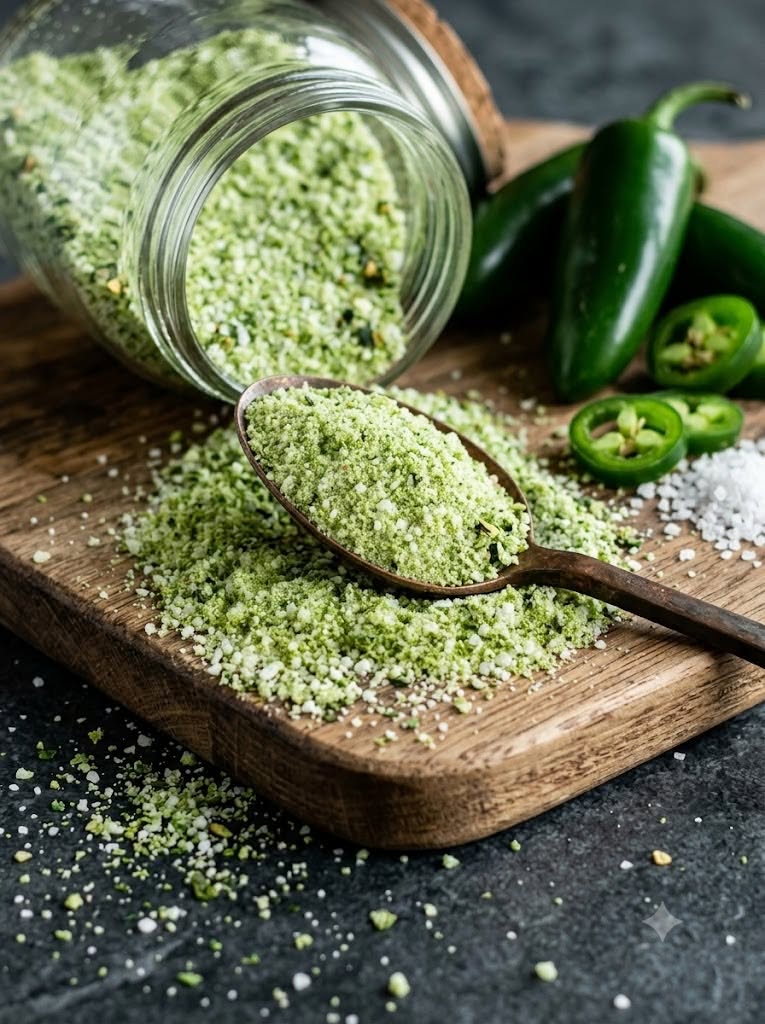
Jalapeño Salt is a simple homemade seasoning that captures the bright, grassy heat of fresh jalapeños in a shelf-stable, sprinkle-anywhere form. Flavored salts have a long history around the world, from the herb-infused salts of the Mediterranean to Mexico’s beloved chile-lime seasonings like sal de gusano and modern favorites such as Tajín.
Combining salt with dried chiles is one of the oldest and smartest ways to preserve a harvest, turning a basket of peppers into a flavor booster you can use all year long.
This recipe couldn’t be easier. Fresh jalapeños are diced and slowly dehydrated until crisp and brittle, concentrating their flavor and gentle heat. They’re then pulsed with coarse kosher salt into a speckled green seasoning that’s as pretty as it is versatile. The result is a salt with a fresh, peppery, slightly vegetal kick that wakes up everything it touches: eggs, avocado toast, grilled meats, popcorn, roasted vegetables, cocktail rims, and much more. It’s also a wonderful way to use up an abundant garden crop and makes a thoughtful, homemade gift for anyone who loves a little heat.
Why People Will Love Jalapeño Salt Recipe
Just two ingredients: Jalapeños and salt are all you need.
Bright, fresh jalapeño flavor: Drying concentrates the pepper’s grassy, slightly fruity taste and gentle heat.
Incredibly versatile: Use it on eggs, meats, vegetables, snacks, fruit, and cocktail rims.
Adds heat and seasoning in one step: It seasons and spices food at the same time.
Long-lasting: Stored properly, it keeps for months, so you always have a flavor booster on hand.
Perfect for preserving a harvest: It’s a great way to use extra garden jalapeños.
Customizable texture: Make it coarse and chunky or fine and powdery.
Adjustable heat: Keep or remove the seeds and ribs to control the spice level.
Beautiful speckled look: Flecks of green make it attractive in jars and on finished dishes.
Great homemade gift: Packed in small jars, it makes a thoughtful, unique present.
Healthier flavor booster: A little goes a long way, adding big flavor without extra fat or calories.
Better than store-bought: It’s fresher, more flavorful, and free of anti-caking agents or fillers.
Key Ingredients
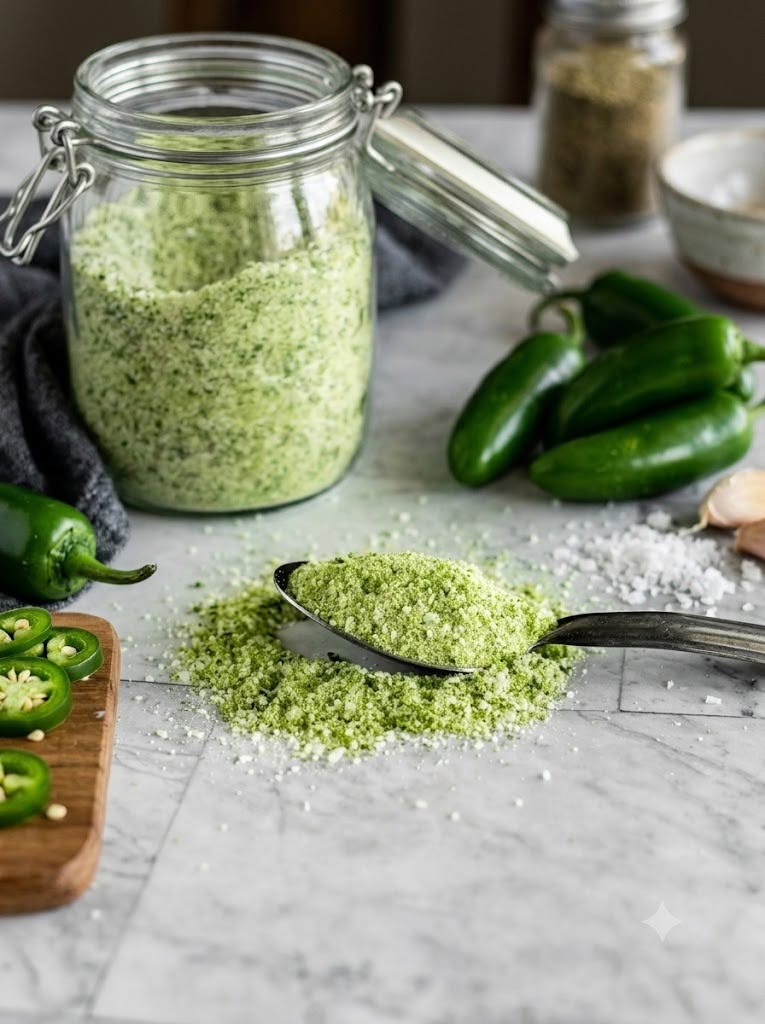
Fresh jalapeños: The star of the seasoning. Jalapeños have a bright, grassy, slightly fruity flavor with mild to moderate heat. Dehydrating them removes moisture, intensifies their flavor, and makes them shelf-stable. Firm, glossy jalapeños with smooth skin give the best results.
Coarse kosher salt: Its large, flaky crystals blend evenly with the dried jalapeños and grind down nicely in a food processor. Kosher salt has a clean, pure flavor without the metallic taste some table salts can have, and its coarse texture helps prevent clumping.
Expert Tips
Wear gloves: Jalapeño oils can irritate your skin and eyes. Gloves make prep safer and more comfortable.
Choose your heat level: Remove the seeds and white ribs for a milder salt, or leave them in for more heat.
Cut pieces evenly: Uniform pieces dry at the same rate, preventing some from staying moist while others over-dry.
Slice thinly for faster drying: Thin rings or small dice dry faster and more evenly than large chunks.
Don’t overlap the pieces: Spread the jalapeños in a single layer so air can circulate freely.
Check for complete dryness: The pieces should snap or crumble easily. If they bend, they need more time.
Rotate the trays: Some dehydrators heat unevenly. Rotate the trays every few hours for consistent drying.
Let the jalapeños cool completely: Warm peppers can release moisture and cause clumping when mixed with salt.
Ventilate when grinding: Grinding dried chiles can release spicy dust. Let the food processor settle before opening the lid, and avoid breathing in the powder.
Use the oven if needed: No dehydrator? Dry the jalapeños on a parchment-lined baking sheet at your oven’s lowest setting (about 170°F / 75°C) with the door slightly ajar, checking every hour.
Adjust the ratio: Use more jalapeños for a spicier, more flavorful salt, or more salt for a milder seasoning.
Add other flavors: Mix in lime zest (dried), garlic powder, smoked paprika, or cumin for a custom blend.
Use a spice grinder for fine salt: For an extra-fine, powdery texture, finish the blend in a spice grinder.
Jalapeño Salt
Ingredients
Dried jalapeños: ½ cup fully dehydrated pieces (made from about 10 fresh jalapeños)
Coarse kosher salt: 1 cup
Instructions
1. Dry the jalapeños.
Rinse the fresh jalapeños well and chop them into small pieces.
Arrange them in a single layer on your dehydrator trays.
Dry at 125°F (52°C) for about 6–10 hours, until the pieces are completely dry, crisp, and snap easily with no moisture left.
2. Break up the dried jalapeños.
Measure out ½ cup of the dried jalapeños and add them to a food processor.
Pulse 2–3 times to break them into smaller bits.
If you want a very fine salt, you can skip this step and process them together with the salt instead.
3. Add the salt.
Pour the coarse kosher salt into the food processor.
4. Blend to your liking.
Pulse until the jalapeños and salt are evenly mixed.
Pulse just a few times for a coarse, chunky seasoning, or keep processing for a finer texture.
5. Store.
Spoon the jalapeño salt into a clean, completely dry airtight container.
Keep it in a cool, dry spot, and fill a salt shaker or small dish as needed.
Important Notes When Making Jalapeño Salt
The jalapeños must be completely dry: Any remaining moisture can cause the salt to clump, grow mold, or spoil. When in doubt, dry them longer.
Drying time varies: Humidity, piece size, and your dehydrator can all affect timing. Check regularly after 6 hours.
Fumes can be strong: Dehydrating jalapeños indoors can release spicy fumes. Run the dehydrator in a well-ventilated area or near an open window.
Heat level varies: Jalapeños differ in spiciness. Taste a small piece before blending if you’re cooking for spice-sensitive eaters.
It’s still salt: This seasoning is mostly salt, so use it sparingly and in place of regular salt, not in addition to it.
Color may fade: Over time, the green color may dull slightly. This doesn’t affect safety, though flavor is best within the first few months.
Storage: Keep in an airtight glass jar in a cool, dry, dark place for up to 6 months to 1 year.
Avoid moisture: Always use a dry spoon, and never shake it directly over steaming pots, which can introduce moisture into the jar.
Clumping fix: If it clumps, add a few grains of uncooked rice to the jar to absorb moisture, or break it up and dry briefly in a low oven.
Dietary notes: It’s naturally vegan, gluten-free, and free of common allergens.
How to Enjoy Jalapeño Salt After Cooking
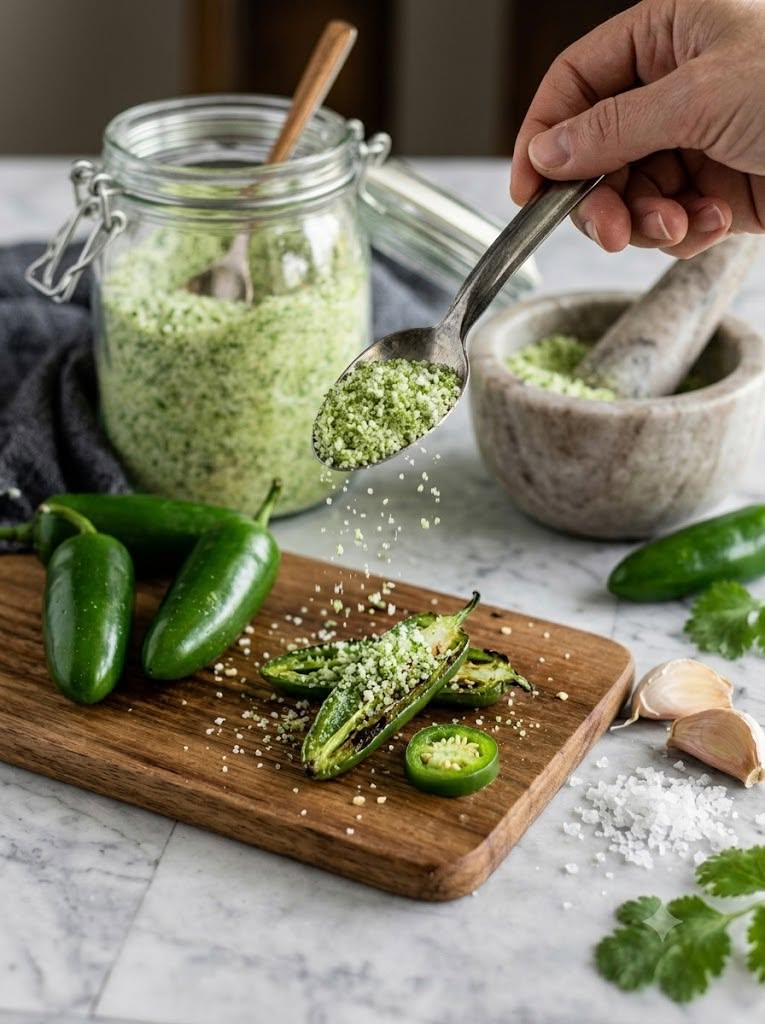
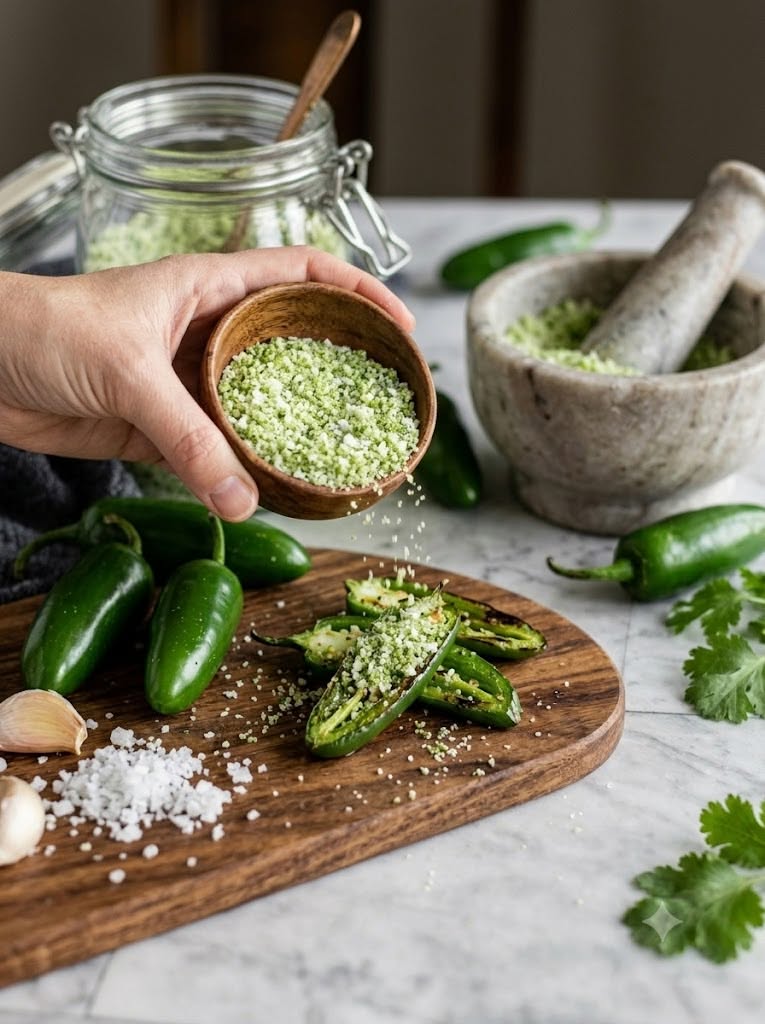
Use it as a finishing salt. Sprinkle jalapeño salt over dishes just before serving to add a bright, spicy kick and a pop of green color.
On breakfast foods.
Fried, scrambled, or poached eggs
Avocado toast
Breakfast potatoes or hash browns
Breakfast burritos and tacos
On meats and seafood.
Steak, chicken, or pork before grilling or roasting
Shrimp, salmon, or white fish
Burgers and sausages
As a rub mixed with olive oil, garlic, and black pepper
On vegetables.
Roasted potatoes, carrots, or cauliflower
Grilled corn on the cob
Sliced cucumbers, tomatoes, or jicama
Sautéed greens or green beans
On snacks.
Popcorn with melted butter
Homemade tortilla chips or potato chips
Roasted nuts or chickpeas
French fries or sweet potato fries
On fruit. In Mexican tradition, spicy salt pairs beautifully with fresh fruit. Sprinkle it over:
Mango, pineapple, watermelon, or cantaloupe
Cucumber and jicama spears with lime
Orange or grapefruit slices
For drinks. Use jalapeño salt to rim glasses for:
Margaritas and spicy palomas
Micheladas and Bloody Marys
Mocktails, sparkling limeade, or tomato juice
To rim a glass, run a lime wedge around the edge, then dip it into a plate of jalapeño salt.
In cooking. Stir it into guacamole, salsa, soups, chili, marinades, and salad dressings in place of regular salt. Remember to taste first, since it’s still salt.
Give it as a gift. Pack it in small glass jars with a label and a ribbon. It makes a lovely homemade present for holidays, housewarmings, or food lovers.
Store it properly.
Keep it in an airtight glass jar away from heat, light, and humidity.
Use a clean, dry spoon every time.
Shake or stir the jar occasionally to keep it loose.
Nutrition Information
Estimated per serving of ¼ teaspoon, based on the full batch made with ½ cup of dried jalapeños and 1 cup of coarse kosher salt.
Calories: 1 kcal | Total Fat: 0 g | Saturated Fat: 0 g | Monounsaturated Fat: 0 g | Polyunsaturated Fat: 0 g | Cholesterol: 0 mg | Sodium: 430–550 mg (depending on salt brand and how finely it’s ground) | Total Carbohydrates: 0.1 g | Dietary Fiber: 0 g | Sugars: 0 g | Protein: 0 g
Note: Sodium varies because kosher salt brands differ in density. Diamond Crystal is lighter and flakier, so it contains less sodium per spoonful than Morton. For a lower-sodium blend, increase the ratio of dried jalapeños to salt.
Smart FAQs About This Recipe
How spicy is jalapeño salt?
It’s mildly to moderately spicy. Drying concentrates the heat a little, but the salt balances it. Keeping the seeds and ribs makes it spicier, while removing them makes it milder.
How long does jalapeño salt last?
Stored in an airtight container in a cool, dry place, it lasts up to 6 months to 1 year. It’s safe beyond that if kept dry, but the flavor and color are best within the first few months.
Can I use other peppers?
Absolutely. Serrano peppers make a spicier salt, habaneros create a fiery, fruity blend, and poblanos give a mild, earthy flavor. You can also mix several types of chiles.
Can I use a different salt?
Yes. Sea salt or flaky salt work well. Avoid fine table salt, which can clump and taste harsher. Coarse salts blend best and give a nicer texture.
Is jalapeño salt healthy?
It adds big flavor with almost no calories, but it’s still mostly salt. Use it in place of regular salt, not in addition to it, to keep sodium in check.
Can I make jalapeño salt without a dehydrator?
Yes. Spread the diced jalapeños on a parchment-lined baking sheet and dry them in the oven at the lowest setting, around 170°F (75°C), with the door slightly open. It usually takes 3–6 hours. Check often and stir occasionally.
How do I know the jalapeños are dry enough?
They should be brittle and snap or crumble easily, with no soft or chewy spots. If any pieces bend, return them to the dehydrator for more time.
Can I use fresh jalapeños instead of dried?
You can make a fresh “wet” jalapeño salt by blending fresh jalapeños with salt and spreading it out to air-dry or oven-dry until completely dry. However, using pre-dried jalapeños is easier and more reliable.
Why is my jalapeño salt clumping?
Clumping usually means there’s still moisture in the jalapeños or the salt has absorbed humidity. Spread it on a baking sheet, dry it in a low oven for 30–60 minutes, let it cool, and store it in an airtight jar with a few grains of rice.
Can I add other flavors to the salt?
Yes. Dried lime zest makes a zesty chile-lime salt, garlic powder adds savory depth, and smoked paprika or cumin give a smoky, Southwestern twist. Add about 1–2 teaspoons per cup of salt and adjust to taste.