Salmon Chowder Recipe
Salmon Chowder is a comforting coastal classic, especially beloved in the Pacific Northwest and Alaska, where wild salmon has been a cornerstone of the diet for thousands of years.
Indigenous peoples of the region have long honored salmon as a sacred, life-sustaining food, and as settlers brought the creamy chowder traditions of New England westward, the two came together in a hearty, creamy soup that’s now a staple in seaside diners, fishing towns, and family kitchens along the Pacific coast.
This recipe captures that cozy, homestyle spirit. Celery, onion, green bell pepper, and garlic are softened in butter to build a sweet, savory base, then simmered with chicken broth, tender diced potatoes, shredded carrots, and fresh dill until the vegetables are soft and flavorful. Creamy, sweet cream-style corn and rich half-and-half turn the broth into a velvety chowder, while chunks of cooked salmon are folded in at the end, staying tender and flaky. The result is a thick, satisfying bowl that’s creamy, slightly sweet, and gently herby, with rich salmon in every spoonful. It’s a wonderful way to use leftover salmon and a perfect meal for chilly evenings.
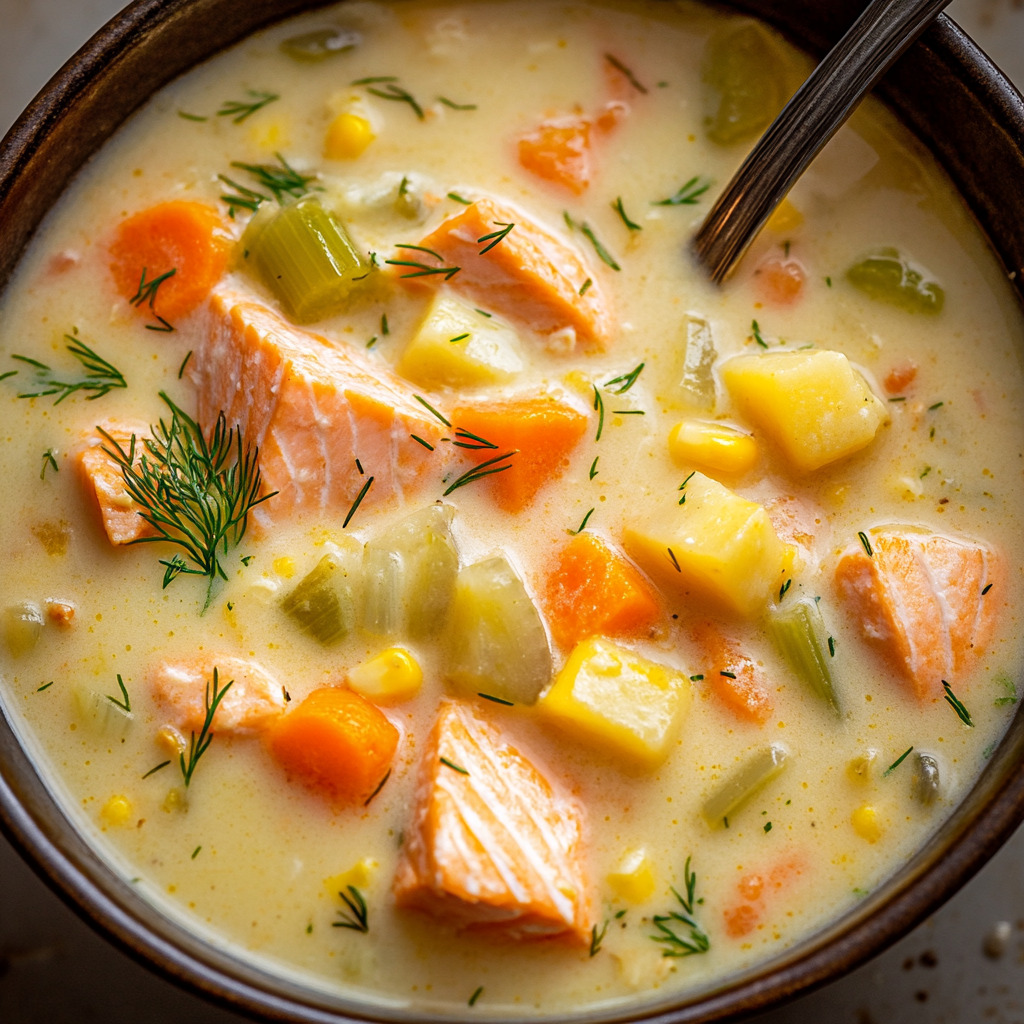
Why People Will LoveSalmon Chowder Recipe Recipe
Creamy, comforting classic: A hearty, rich chowder that warms you from the inside out.
Flaky, flavorful salmon: Tender salmon chunks add rich flavor and healthy protein.
Natural sweetness: Cream-style corn and carrots add a gentle sweetness that balances the savory broth.
Fresh dill flavor: Dill brightens the soup and pairs beautifully with salmon.
Hearty vegetables: Potatoes, carrots, celery, and peppers make it filling and nourishing.
No flour needed: Cream-style corn and potatoes naturally thicken the chowder.
Great use of leftovers: Perfect for using leftover baked, grilled, or poached salmon.
Simple ingredients: Everyday pantry and fridge staples come together easily.
One-pot meal: Everything cooks in a single saucepan.
Lighter than many chowders: Half-and-half keeps it creamy without heavy cream.
Kid-friendly: Mild, creamy, and slightly sweet, it’s a hit with all ages.
Packed with omega-3s: Salmon adds heart-healthy fats.
Perfect for cold weather: Cozy, warming, and satisfying.
Key Ingredients
Cooked salmon: The star of the chowder. Rich, buttery, and full of flavor, it adds hearty protein and healthy omega-3 fats. Leftover baked, grilled, poached, or canned salmon all work.
Butter: Adds rich flavor and helps soften the vegetables, building a savory base.
Celery, onion, and green bell pepper: These aromatics create a sweet, savory foundation. The bell pepper adds a mild, fresh flavor and a touch of color.
Garlic: Adds warm, aromatic depth.
Low-sodium chicken broth: Provides a savory base while keeping the salt in check. Seafood or vegetable broth also works.
Potatoes: Make the chowder hearty and filling, and release starch that thickens the broth. Yukon Golds stay creamy and hold their shape well.
Shredded carrots: Add natural sweetness, color, and tenderness. Shredding helps them cook quickly and blend into the chowder.
Fresh dill: A classic pairing with salmon, adding a bright, slightly tangy, herbal flavor.
Cream-style corn: Sweet, creamy, and thick, it adds body and natural sweetness while helping thicken the chowder.
Half-and-half: Makes the chowder rich and creamy without being too heavy.
Salt and black pepper: Balance and enhance the flavors.
Expert Tips
Cut vegetables evenly: Uniform pieces cook at the same rate.
Don’t brown the vegetables: Cook them gently until softened to keep the chowder’s flavor sweet and mild.
Choose the right potatoes: Yukon Golds hold their shape and stay creamy; russets break down more and thicken the soup.
Taste before adding all the salt: Cream-style corn and broth contain salt. Start with 1 teaspoon and adjust at the end.
Check the potatoes: Depending on size, they may become tender sooner than 40 minutes. Start checking at 25–30 minutes.
Keep the heat gentle after adding dairy: Simmer softly to prevent the half-and-half from curdling.
Add salmon carefully: Stir gently so the salmon stays in tender chunks rather than breaking into tiny flakes.
Use leftover salmon: Baked, grilled, or poached salmon all add great flavor.
Remove skin and bones: Check the salmon carefully before adding it.
Thicken if needed: Mash a few potato pieces against the side of the pot, or stir in a cornstarch slurry.
Add smoky flavor: Stir in a little smoked salmon or crumbled bacon for extra depth.
Brighten with lemon: A squeeze of fresh lemon juice before serving lifts the flavors.
Add fresh dill at the end: Save extra dill for garnish to keep its flavor fresh and vibrant.
Salmon Chowder
Ingredients
Celery: ½ cup, chopped
Onion: ½ cup, chopped
Green bell pepper: ½ cup, chopped
Garlic: 1 medium clove, minced
Butter: 3 tablespoons
Low-sodium chicken broth: 1 can (14.5 oz)
Potatoes: 1 cup, peeled and diced
Carrots: 1 cup, shredded
Salt: 1½ teaspoons
Black pepper: ½ teaspoon, freshly ground
Fresh dill: 1 teaspoon, chopped, plus more for garnish
Cream-style corn: 1 can (14.75 oz)
Half-and-half: 2 cups
Cooked salmon: 1¾–2 cups, in chunks
Instructions
1. Cook the vegetables.
Melt the butter in a large saucepan over medium heat.
Add the celery, onion, bell pepper, and garlic.
Cook for 5–7 minutes, stirring now and then, until the vegetables are soft and fragrant.
2. Add the broth and seasonings.
Pour in the chicken broth, then add the potatoes, shredded carrots, salt, pepper, and dill. Stir well.
3. Simmer until tender.
Bring the pot to a boil, then lower the heat.
Cover and simmer gently for about 40 minutes, until the potatoes and vegetables are almost fork-tender.
4. Finish the chowder.
Stir in the cream-style corn, half-and-half, and salmon.
Let it simmer uncovered for about 15 more minutes, stirring occasionally, until everything is hot and creamy.
Keep the heat gentle so the half-and-half doesn’t curdle, and stir carefully so the salmon stays in nice chunks.
5. Serve.
Ladle into bowls, sprinkle with extra fresh dill if you like, and serve hot.
Important Notes When Making Salmon Chowder Recipe
Don’t boil after adding half-and-half: High heat can cause the dairy to separate.
Salmon should be fully cooked: This recipe uses cooked salmon. If using raw salmon, cut it into chunks and simmer in the chowder for 5–7 minutes until opaque and flaky.
Watch for bones: Even fillets can contain pin bones. Check carefully before adding.
Watch the salt: Cream-style corn and broth add sodium. Taste before adding the full amount of salt.
Simmering time varies: Potatoes cut smaller will cook faster. Check for tenderness rather than relying only on time.
Thickness: The chowder thickens as it cools. Add broth or milk when reheating.
Storage: Refrigerate leftovers in an airtight container for up to 2–3 days.
Reheating: Warm gently over low heat, stirring often. Avoid boiling.
Freezing: Not recommended, as dairy and potatoes can become grainy when frozen and thawed.
Gluten-free: Naturally gluten-free if your broth and cream-style corn are gluten-free.
Allergens: Contains fish and dairy.
How to Enjoy Salmon Chowder Recipe After Cooking
Serve it hot. Ladle the chowder into warm bowls, making sure each serving has plenty of salmon, potatoes, and vegetables. Garnish with fresh dill.
Add finishing touches.
Extra chopped fresh dill
Chopped chives or green onions
Crumbled crispy bacon
A squeeze of fresh lemon
Freshly cracked black pepper
A pat of butter melting on top
A sprinkle of smoked paprika
Oyster crackers for crunch
Pair with breads.
Crusty sourdough: A Pacific Northwest classic for dipping.
Sourdough bread bowl: Serve the chowder right inside.
Oyster crackers or saltines: Classic chowder companions.
Biscuits or cornbread: Warm and comforting.
Garlic bread: Great for soaking up the creamy broth.
Pair with sides.
Green salad: A crisp salad with lemon vinaigrette.
Coleslaw: A crunchy, tangy contrast.
Roasted vegetables: Asparagus, green beans, or Brussels sprouts.
Grilled cheese: Perfect for dunking.
Make it a cozy meal. Serve the chowder with crusty bread and a fresh salad for a complete, comforting dinner on a cold evening.
Pair with drinks. A crisp white wine like Chardonnay, Pinot Gris, or Sauvignon Blanc, a light lager, or iced tea, lemonade, or sparkling water with lemon.
Store and reheat.
Refrigerate: Store in an airtight container for up to 2–3 days.
Stovetop: Reheat over low heat, stirring gently and adding milk or broth if thick.
Microwave: Heat in short intervals at medium power, stirring between each.
Avoid boiling: Keeps the chowder creamy and the salmon tender.
Repurpose leftovers.
Spoon thick leftover chowder over baked potatoes.
Use as a creamy sauce over rice or pasta.
Serve in a bread bowl for an easy lunch.
Nutrition Information
Estimated per serving, based on 6 servings (about 1¼ cups each), made with salted butter, low-sodium chicken broth, canned cream-style corn, half-and-half, about 1⅞ cups of cooked salmon, and 1½ teaspoons of salt.
Calories: 330 kcal | Total Fat: 19.7 g | Saturated Fat: 10.4 g | Monounsaturated Fat: 5.8 g | Polyunsaturated Fat: 2.3 g | Cholesterol: 73 mg | Sodium: 850–950 mg (depending on broth, corn, and added salt) | Total Carbohydrates: 24.7 g | Dietary Fiber: 2.3 g | Sugars: 7.7 g | Protein: 15 g
Note: Reducing the salt to ¾ teaspoon lowers sodium to about 560–620 mg per serving. Using whole milk instead of half-and-half saves about 40 calories and 5 g of fat per serving, though the chowder will be thinner. Using wild salmon slightly lowers the fat compared to farmed salmon.
Smart FAQs About This Recipe
What type of salmon is best for chowder?
Any cooked salmon works. Wild salmon like sockeye or coho has a richer flavor and firmer texture, while farmed Atlantic salmon is milder and more buttery. Leftover baked or grilled salmon is perfect.
Can I use canned salmon?
Yes. Drain it well, remove any large bones and skin, and gently fold it in at the end. One 14.75-oz can works well.
Can I use smoked salmon?
Yes. Hot-smoked salmon adds a delicious smoky flavor. Use a little less salt, since smoked salmon is salty.
What’s the difference between chowder and bisque?
Chowder is chunky and hearty, often with potatoes and vegetables. Bisque is smooth, puréed, and more refined.
Is salmon chowder healthy?
It’s a good source of protein and omega-3 fatty acids. To make it lighter, use whole milk, reduce the butter, and cut back on salt.
Can I use raw salmon?
Yes. Cut raw salmon into bite-sized chunks and add it with the corn and half-and-half. Simmer gently for 5–7 minutes, until the salmon is opaque and flakes easily.
How do I make the chowder thicker?
Mash some of the potatoes into the broth, simmer uncovered a little longer, or stir in a slurry of 1 tablespoon cornstarch mixed with 2 tablespoons cold water.
Why did my chowder curdle?
The half-and-half likely got too hot. Keep the heat low after adding dairy, and avoid boiling.
Can I make it in a slow cooker?
Yes. Sauté the vegetables first, then add them to the slow cooker with the broth, potatoes, carrots, and seasonings. Cook on low for 6–7 hours or high for 3–4 hours. Stir in the corn, half-and-half, and salmon for the last 30 minutes.
Can I make it ahead of time?
Yes. Make the vegetable base up to 1 day ahead and refrigerate it. When ready to serve, reheat gently and stir in the corn, half-and-half, and salmon until heated through